
REVIEW · NEW ZEALAND
Rangitoto Island: Sea Kayak & Summit Hike Day Trip
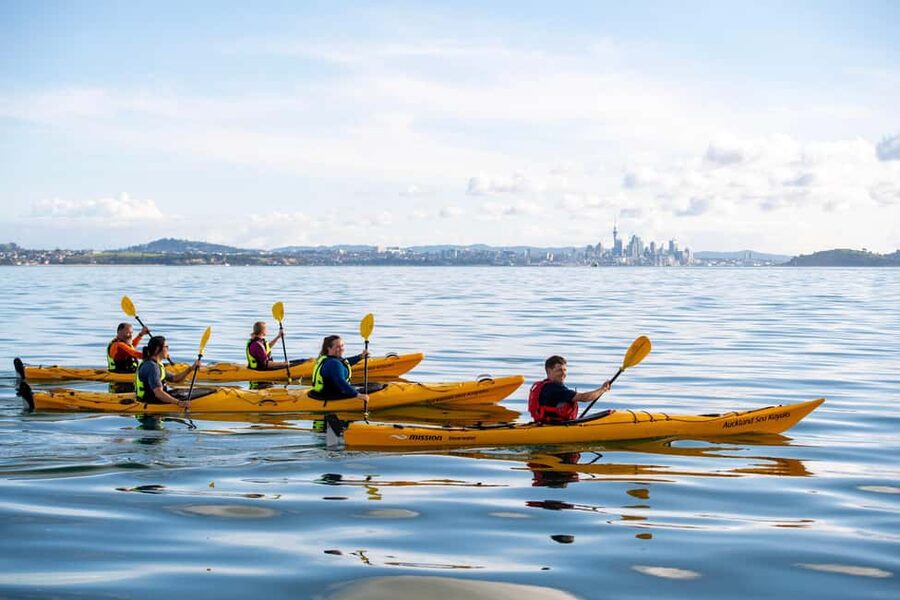
A volcano, a kayak, and a barbecue lunch make a fine Auckland day. This full-day trip combines an open-water paddle across Waitemata Harbor with a hike up Rangitoto, Auckland’s youngest and most active volcano. I like the way you reach the island under your own power, then earn the summit views on foot. I also like the small group size, limited to nine people, which gives the guide room to offer real paddling help.
The main catch is simple: this is not a gentle sightseeing cruise. Wind can make the return paddle tiring, and the tour is not suitable for people with low fitness, back problems, or a body weight over 275 pounds, or 125 kilograms. If you are comfortable with a full day outdoors, the 360-degree summit view and the hearty lunch make the $144 price feel fair. If open water makes you uneasy, this may be a day to think through carefully.
Key points to know before booking
- Paddle from St Heliers Beach to a volcanic island: You cross Waitemata Harbor by kayak rather than simply arriving by ferry.
- One-hour walk to Rangitoto’s summit: The trail passes through pohutukawa trees, black volcanic scoria, and native plants.
- Small groups help on the water: With no more than nine participants, you get closer guidance during instruction and paddling.
- Conditions matter: Calm water can make the crossing pleasant, while wind may make the return feel much longer.
- Lunch is part of the reward: A barbecue meal, healthy Kiwi treats, and hot and cold drinks are included.
- The return may use a sail: If conditions and time allow, the kayak can use a sail on the way back to St Heliers Bay.
Why Rangitoto makes such a good Auckland day trip
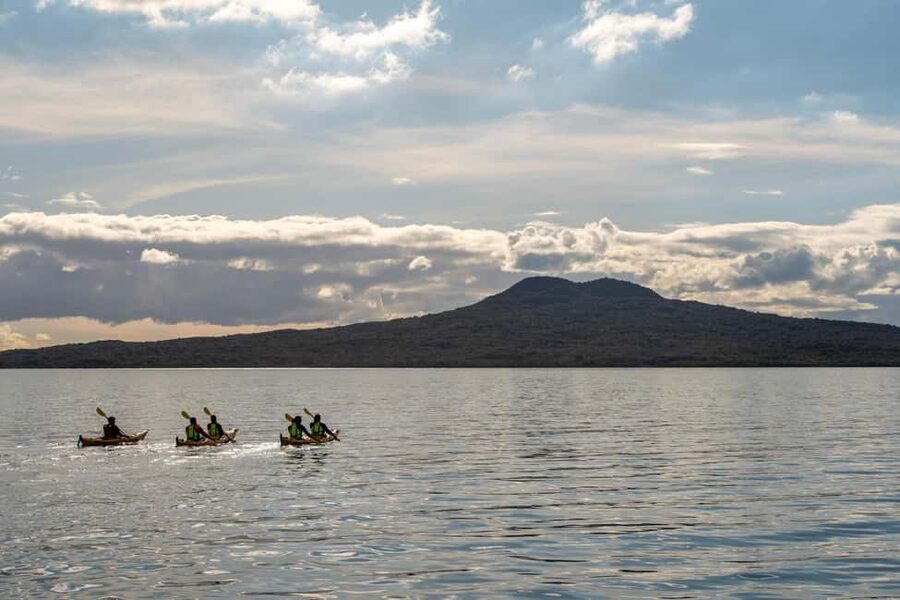
Auckland is built around water, yet many city tours keep you firmly on land. This trip changes the view completely. From the kayak, you see the city from Waitemata Harbor, whose name means sparkling waters, while Rangitoto grows ahead as a dark volcanic cone.
Rangitoto is the largest and youngest of Auckland’s volcanic cones, and it remains the region’s most active volcano. That does not mean you are visiting an erupting crater. It means the island’s shape and ground come from relatively recent volcanic activity, giving the hike a distinctive surface of baked lava and scoria.
I like that this outing connects three parts of Auckland in one day: the harbor, the volcanic island, and the native vegetation that has returned to the island. You are not simply checking off a viewpoint. You are seeing how the city, sea, volcano, and plant life fit together.
The day also has a pleasant rhythm. First comes instruction and steady paddling. Then you trade the kayak for walking shoes and climb through the island forest. After the summit, lunch waits near the water before you paddle home. That sequence makes the trip feel like a real outing rather than a short activity bolted onto a city holiday.
More river day trips in New Zealand:
- From Queenstown: Dart River Canoe & Jet Boat Day Trip
★ 4.8 · 148 reviews - HCM: Mekong Delta, My Tho & Ben Tre Coconut Village
★ 4.7 · 3,304 reviews - From Tirana/Shkodra: Komani Lake and Shala River Day Trip
★ 4.8 · 1,520 reviews
Starting at St Heliers Beach
The standard meeting point is St Heliers Beach at 384 Tamaki Drive. You meet at the beach at the scheduled start time, so comfortable clothing and shoes matter from the beginning. You may also request pickup from The Atrium at Auckland War Memorial Museum. If you use that option, meet there 30 minutes before the tour begins.
The beach start keeps the morning practical. You are close to the water, close to the kayaks, and ready to begin without a long transfer. The museum pickup is useful if you are staying near central Auckland and do not want to arrange your own trip to St Heliers.
The group is capped at nine people, with an English-speaking instructor. That is a good size for an activity where the guide must watch paddling technique, weather conditions, and the group’s pace. Tony, Ben, Daniel, and Eric are among the guides praised for clear explanations, good organization, humor, and careful attention. Daniel also received special praise for making a solo participant feel comfortable, which matters if you are booking alone.
Safety instruction before crossing Waitemata Harbor
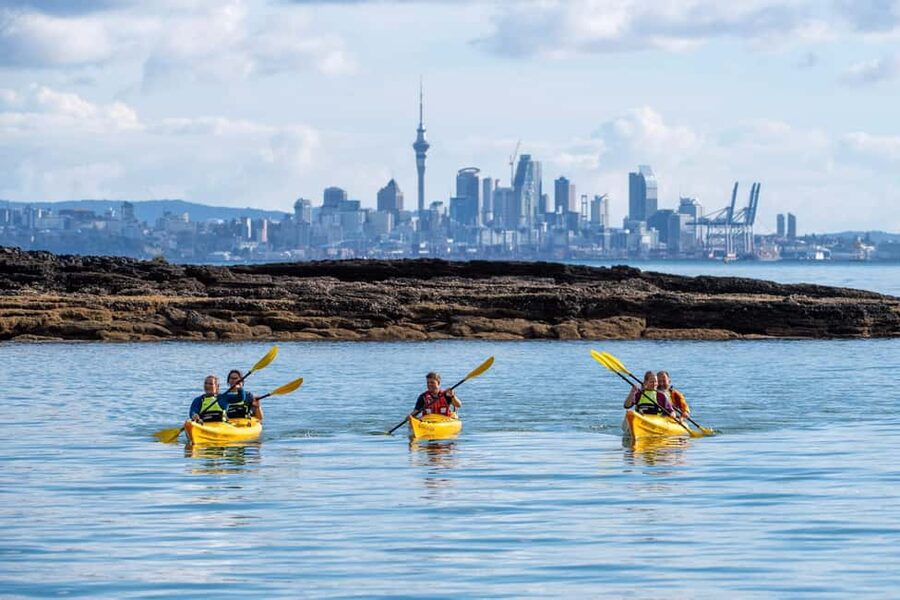
Before you paddle, the guide gives a safety briefing and shows you how to handle the kayak. This is not a minor formality. You are heading onto open water, and your comfort with the boat will affect the whole day.
I would pay close attention to the guidance on posture, paddle strokes, steering, and what to do if the water becomes choppy. The trip is suitable for people who can manage a full day of kayaking and hiking, but it is not designed for visitors with a low level of fitness.
Your experience can change with the wind. Calm conditions make the crossing feel scenic and social. Stronger wind can turn the return into hard work. One account describes the beach seeming not to get any closer on the way home, a useful reminder that open-water paddling is real exercise even when the views are beautiful.
Motion sickness is another personal factor to consider. One solo participant who was nervous about open water and prone to motion sickness found that taking Dramamine helped. That is an individual experience, not a guarantee, so you should make your own health decisions and ask a medical professional about medication if needed.
The kayak crossing to Rangitoto
Once instruction is complete, you paddle across the harbor toward Rangitoto. This is the heart of the experience. You are not looking at Auckland from a boat window. You are sitting at water level, feeling each stroke, and watching the island change size as you approach.
The harbor may also bring wildlife sightings, including Little Blue Penguins and Cook’s Petrels. These sightings are possible, not promised, so treat them as an extra rather than the reason to book. The main reward is the perspective itself: Auckland city behind you, open water around you, and Rangitoto ahead.
The trip’s pace depends on conditions and the group. Some days may feel smooth and easy. On a windy day, your arms and shoulders will notice the distance. The guide’s role is especially important here, and the small group limit helps keep instruction and encouragement close at hand.
I like this portion because it gives you a real sense of place. By the time you reach Rangitoto, you have crossed the harbor that shapes Auckland’s identity. The island is not just a backdrop for photographs. It is the destination you have worked toward.
More hiking day trips in New Zealand:
- Cinque Terre Day Trip with Optional Hiking or Pisa
★ 5.0 · 8,486 reviews - Florence: Cinque Terre Day Trip with Optional Hiking or Pisa
★ 4.9 · 4,848 reviews - From Tirana: Bovilla Lake & Gamti Mountain Hiking Day Trip
★ 4.9 · 4,397 reviews - From SF: Yosemite Day Trip with Giant Sequoias Hike & Pickup
★ 4.9 · 1,331 reviews
Hiking the pohutukawa-covered volcano
At Rangitoto, you leave the kayaks and begin the walk to the summit. The climb takes about one hour and is described as leisurely, but you still need enough fitness for an uphill hike over volcanic ground.
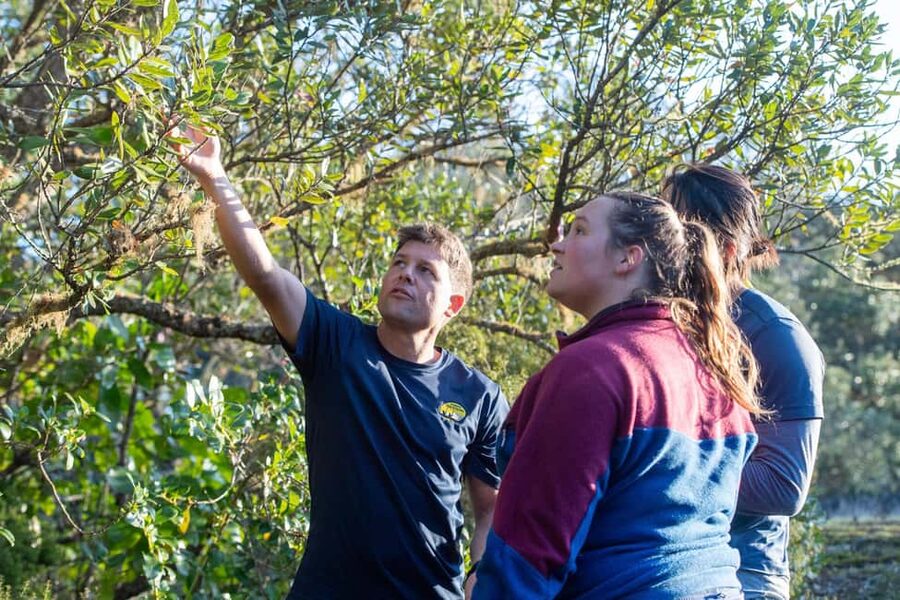
The trail passes beneath pohutukawa trees and through baked scoria rock. More than 200 native trees and flowering plants grow on the island, so the walk is not simply a bare climb over black stone. The contrast between volcanic rock and recovering plant life gives the route its character.
Tony was praised for explaining how the island regenerated after the lava flow. That kind of detail adds meaning to what you are seeing. The vegetation is not just pretty cover. It is part of the island’s story of regrowth on volcanic ground.
At the top, you get the finest 360-degree views in the Auckland region, according to the tour description. You can expect the summit to be the visual high point of the day, with Auckland and the surrounding water spread around you. Bring a camera, but also leave time to look up from it. The payoff is the change in viewpoint: the harbor you crossed becomes part of a much larger picture.
The tour focuses on the summit and allows roughly one hour for the walk. Rangitoto has other trails, but this outing may not leave much extra time to explore them. If your priority is wandering every path on the island, a ferry-based visit with your own schedule may suit you better.
Lunch by the water after the climb
After returning to the water’s edge, you receive a barbecue lunch with hot and cold drinks. The meal is more important than it may sound. After kayaking and climbing, you need proper fuel, not just a small snack.
The food is described as healthy Kiwi fare and hearty refreshments. One participant singled out a steak lunch cooked by Daniel, while another praised the guide’s skill at the barbecue. The exact meal may vary, so do not book expecting a particular dish, but you can reasonably expect a substantial included lunch rather than having to carry your own full meal.
Eating before the hike may also be worth discussing with your guide. One participant was very glad to have eaten first because it provided useful energy for the climb. The schedule places lunch after the summit, yet that individual experience shows how personal meal timing can be on an active day.
If time and conditions permit, you may have a refreshing swim before the gear is packed back into the kayaks. This is an optional bonus, not the central activity. Bring comfortable clothes suited to getting wet, but do not assume a swim will happen every day.
The return paddle and possible sail
The return crossing heads south toward St Heliers Bay. This can be the most demanding part of the day, particularly if the wind rises or you are tired from the hike.
The tour may use a sail to help the kayaks return safely. That can give your arms a break and add another small adventure to the trip. Still, the sail depends on suitable conditions and available time, so you should be prepared to paddle rather than count on sailing.
This is where the tour’s active nature becomes clearest. You may finish with a strong sense of achievement, but you may also feel tired. Comfortable clothing, suitable shoes, water, and a realistic view of your fitness will make a difference. The supplied information lists comfortable shoes and comfortable clothes as essentials, and that advice is sound.
What the $144 price includes
At $144 per person, the trip is not the cheapest way to see Rangitoto. You can compare it with a simple ferry outing, where you have more freedom and may spend less. The kayak trip earns its higher price by combining transport, instruction, equipment, a guided hike, lunch, and drinks in one day.
Included are the guide, safety briefing, paddling instruction, all kayaking equipment, light refreshments, barbecue lunch, and hot and cold drinks. You also get a small-group setting rather than being one person among a large crowd.
For me, the strongest value comes from the guided crossing. A ferry can get you to Rangitoto, but it cannot give you the same water-level view of Auckland or the satisfaction of crossing under your own power. The guide also adds context about the island’s volcanic ground and plant regeneration.
The price feels strongest for visitors who want an active, organized day and would otherwise need to arrange several pieces separately. It feels weaker for those who mainly want summit photographs, extra island walking time, or a relaxed schedule. In those cases, independent transport may offer better control.
Who will enjoy this most
This trip suits you if you like outdoor days with a clear structure. It is a good fit for a fit solo visitor, a couple, or a small group that wants more than a standard city tour. Solo participants may appreciate the guide’s close attention in a group of nine or fewer.
It also suits people who enjoy learning while moving. You get paddling instruction, volcanic context, native plant life, a summit climb, and harbor views without spending the day inside a vehicle.
You should think twice if you have back problems, use a wheelchair, have a low level of fitness, or weigh more than 275 pounds, or 125 kilograms. The tour is also not suitable for people over 95. These limits are practical rather than minor footnotes because the day involves open-water kayaking, lifting and handling gear, and an uphill walk.
Weather is part of the decision. Calm water can make the whole day feel easy and scenic. Wind may make the crossing challenging, especially on the way back. Free cancellation is available up to 24 hours before departure for a full refund, which gives you some flexibility while planning.
FAQ
How long does the Rangitoto kayaking and hiking trip last?
It is a full-day experience. The exact starting time varies, so you should check availability for the date you want.
Where do I meet the tour?
The main meeting point is St Heliers Beach at 384 Tamaki Drive. You meet at the beach at the scheduled start time.
Is pickup available from Auckland War Memorial Museum?
Yes. If you request pickup, meet at The Atrium at Auckland War Memorial Museum 30 minutes before the tour starts.
How large is the group?
The group is limited to nine participants, making it a small-group experience.
What language is the instruction in?
The instructor and tour are in English.
Is lunch included?
Yes. The tour includes light refreshments, a barbecue lunch, and hot and cold drinks.
What should I bring?
Bring comfortable shoes and comfortable clothes. You should also dress for an active day around water and volcanic terrain.
Who should not book this activity?
It is not suitable for people with back problems, wheelchair users, people with a low level of fitness, people over 275 pounds or 125 kilograms, or people over 95 years old.
Should you book the Rangitoto kayak trip?
Book it if you want to experience Auckland from the water and do not mind earning your island views with a paddle and a climb. The strongest reasons are the small group, attentive guides such as Tony, Ben, Daniel, and Eric, the volcanic summit, and the included barbecue lunch.
Skip it if you want a quiet ferry ride, a flexible island schedule, or a short walk with little physical effort. Wind can make the return paddle demanding, and the day leaves limited time for Rangitoto’s other trails.
For an active visitor with reasonable fitness, this is one of the more memorable ways to meet Auckland. You cross the sparkling harbor, walk across volcanic ground, look out from the summit, and return with a full stomach and tired arms. At $144, that is a fair price for a guided day that feels like an actual adventure rather than a quick stop on a sightseeing route.
More island day trips in New Zealand
- Krabi: Premium 4-Island Day Trip by Longtail Boat with Lunch
★ 4.5 · 4,812 reviews - Crete: Day Trip to Agios Nikolaos and Spinalonga Island
★ 4.6 · 4,416 reviews - Inverness: Isle of Skye and Eilean Donan Castle Day Trip
★ 4.8 · 4,136 reviews - Krabi: Hong Islands Day Trip by Speedboat with Lunch
★ 4.5 · 3,952 reviews
More mountain day trips in New Zealand
- From Marrakech: Atlas Mountains Day Trip with Camel Ride
★ 4.8 · 4,709 reviews - From Sydney: Blue Mountains Full-Day Trip
★ 4.5 · 4,471 reviews - Blue Mountains Day Trip from Sydney Including Scenic World
★ 4.5 · 2,420 reviews - Marrakech Day Trip: Agafay Desert, Atlas Mountains and Camel Ride
★ 5.0 · 1,856 reviews
Just added around New Zealand
- From Te Anau: Milford Sound Cruise and Coach Day Trip★ 4.7 · 717 reviews
- From Auckland: Hobbiton & Waitomo Caves Full-Day Trip★ 4.8 · 179 reviews
- From Auckland: Hobbiton Movie Set Full-Day Trip★ 4.9 · 474 reviews
- From Rotorua: Taupo Day Trip with Orakei Korako or Waiotapu★ 4.7 · 35 reviews
- From Queenstown: Milford Sound Day Trip with Cruise & Flight★ 4.9 · 29 reviews
- From Queenstown: Dart River Canoe & Jet Boat Day Trip★ 4.8 · 148 reviews
- From Queenstown: Mount Cook Day Trip via Scenic Flight★ 4.9 · 27 reviews
- From Queenstown: Doubtful Sound Wilderness Day Trip★ 4.7 · 314 reviews
Island Day Trips, compared.
Premium 4-Island Day Trip by Longtail Boat with Lunch
Read our review →
Crete: Day Trip to Agios Nikolaos and Spinalonga Island
Read our review →
Isle of Skye and Eilean Donan Castle Day Trip
Read our review →
Hong Islands Day Trip by Speedboat with Lunch
Read our review →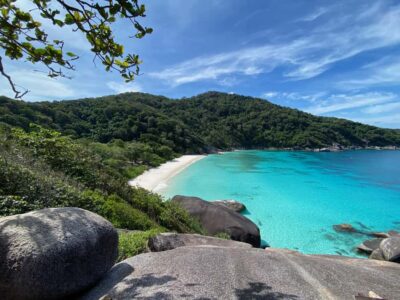
Similan Islands Early-Bird Tour From Phuket and Khao Lak!
Read our review →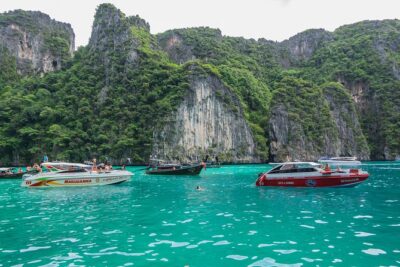
Phi Phi Islands Adventure Day Trip w/ Seaview Lunch by V. Marine
Read our review →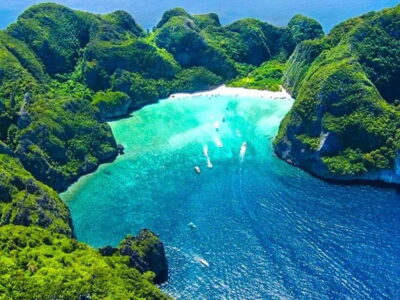
Phi Phi Islands and Maya Bay Day Trip with Lunch
Read our review →
Boston to Martha’s Vineyard Day Trip with Optional Island Tour
Read our review →Browse the lists this tour appears in