
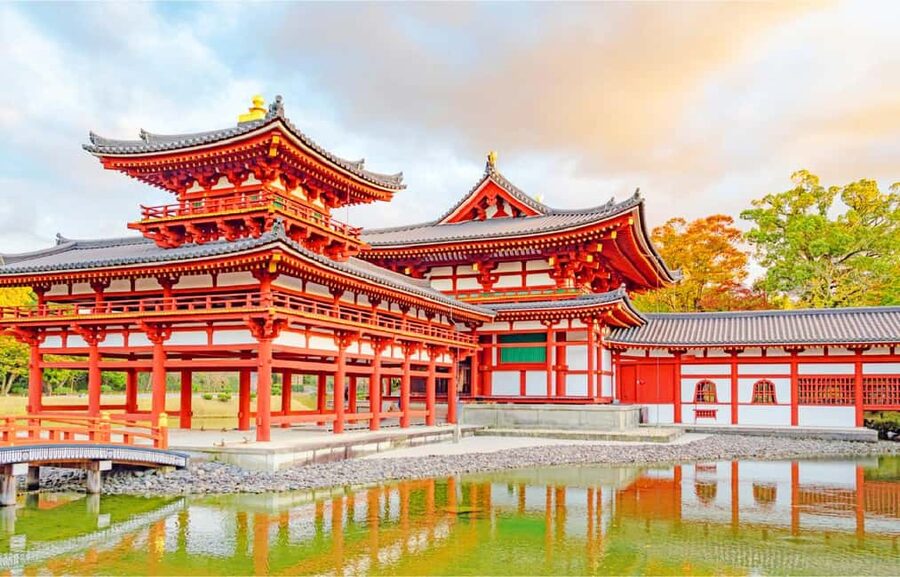
REVIEW · JAPAN
Osaka: Nara and Uji Day Trip with Deer Park and Hot Spring
Nara’s deer are only the beginning. This 10-hour outing links Nara Park and Todai-ji with Uji’s matcha shops, Byodo-in, and a Japanese hot spring, giving you several very different sides of the Kansai region in one day. I especially like the easy coach transport from Osaka and the way the day ends with a bath instead of another crowded attraction.
I also like the mix of guided sightseeing and free time. Guides such as Etta, Lucia, Watson, and Nick Lee have been praised for clear explanations, humor, good food tips, and help with directions. The main drawback is time: Nara and Uji both deserve longer visits, so you will need to choose what matters most at each stop.
Key points to know before booking
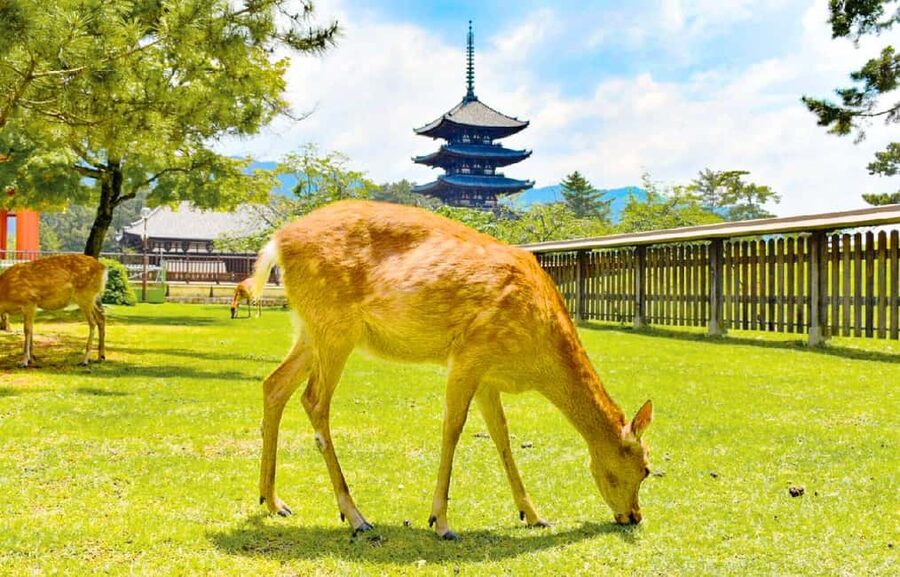
- Deer crackers are provided: You receive a complimentary pack at the meeting point, then feed the deer in Nara Park.
- Two major Nara sights: Todai-ji and Kasuga Taisha are included, but temple admission costs extra.
- Uji is a food stop as well as a cultural one: Look for matcha ice cream, cakes, soba noodles, and souvenirs along the shopping street.
- The hot spring is clothing-free: Tattoos may prevent entry, and you cannot wear a swimsuit or other clothing in the bathing area.
- The day is tightly planned: You get about two hours in Nara and 90 minutes in Uji, with traffic able to shift the schedule.
- Compact coach seating is possible: The vehicle is air-conditioned, but Japanese tour buses can feel snug.
From Osaka to Nara, a useful start at 8:40
The tour begins at Harimaya Bld, at 1-chōme-3-11 Nipponbashi, in the Namba and Shinsaibashi area. Look for the guide holding a yellow flag, and arrive at least 15 minutes early. The stated departure time is 8:40 a.m., and late arrivals or no-shows are not refunded.
That early start matters. Nara is a major day-trip destination, and the coach ride takes about 70 minutes before you reach the park. Round-trip transport saves you from working out train connections, finding the right station exits, and moving a group between scattered sights.
The ride is also useful preparation time. Guides explain the day, point out practical details, and share suggestions for each stop. Etta was especially praised for sending locations and recommendations by WhatsApp, while Watson was noted for keeping a large group organized and explaining rules clearly.
This is a shared tour with people from several countries. English, Japanese, and Traditional Chinese are offered, often with the guide moving between languages. That makes the trip flexible for a mixed group, though explanations may take longer than on a single-language tour.
If fewer than 13 people join, the guide may also drive. In that case, expect basic explanations rather than a full running commentary. The vehicle has air conditioning, but seat designs are generally compact, so this is not the day for expecting limousine-style space.
More hot spring day trips in Japan:
- Tokyo: Mount Fuji 5th Station & Onsen Day Trip
★ 4.3 · 75 reviews - Tokyo: Onsen, Arts, and Nature Day Trip to Fuji and Hakone
★ 5.0 · 66 reviews - Chiang Mai: Chiang Rai Temples, Karen Tribe and Hot Springs
★ 4.7 · 5,401 reviews
Feeding deer in Nara Park
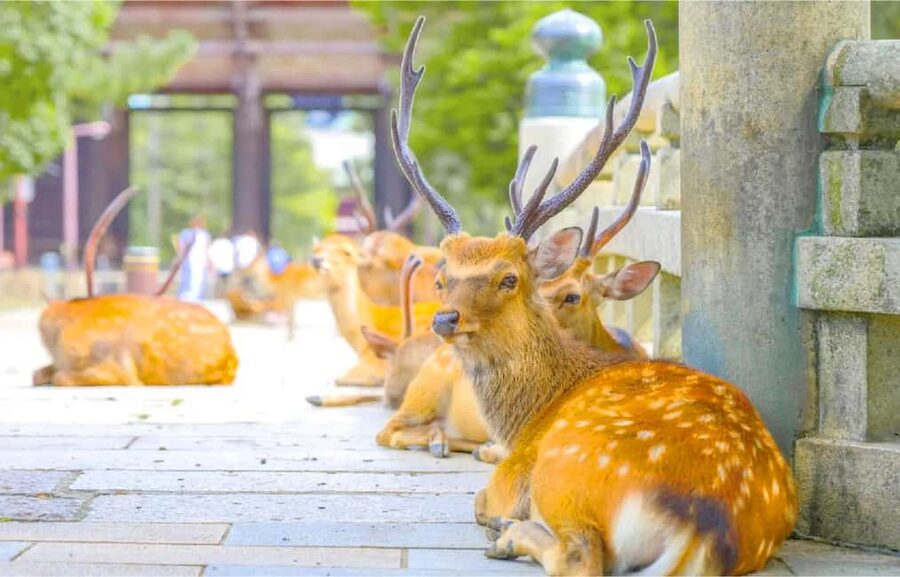
Nara Park is the emotional high point for many people. The park stretches around the base of Wakakusa Mountain and brings together open paths, maple trees, temple grounds, and hundreds of deer. The highest concentration of deer is in the area visited by the tour, making it easy to get close to them.
You receive deer crackers, called shika senbei, at no extra charge. Hold them where the deer can see them and you may quickly attract several animals. They can be gentle and accustomed to people, but they are also eager. Groups may crowd around you, tug at clothing, or follow you once they spot the crackers.
The best approach is simple: keep the crackers hidden until you are ready, feed one deer at a time, and show empty hands when the food is gone. Do not tease the deer with a cracker or hold food above a child’s head. This small bit of care makes the encounter safer and kinder for both you and the animals.
The maple forest gives this stop its visual appeal, especially in autumn. Still, the park is more than a deer photo opportunity. Paths lead toward important religious buildings, and the setting gives you a clear sense of how nature and sacred sites share space in old Japanese cities.
You have about two hours in Nara for the park and nearby sights. That is enough to feed the deer and see one major interior, but not enough for a slow visit to every corner. Wear comfortable shoes. The coach parking area is not right beside every scenic point, and walking is part of the experience.
Todai-ji and the Great Buddha
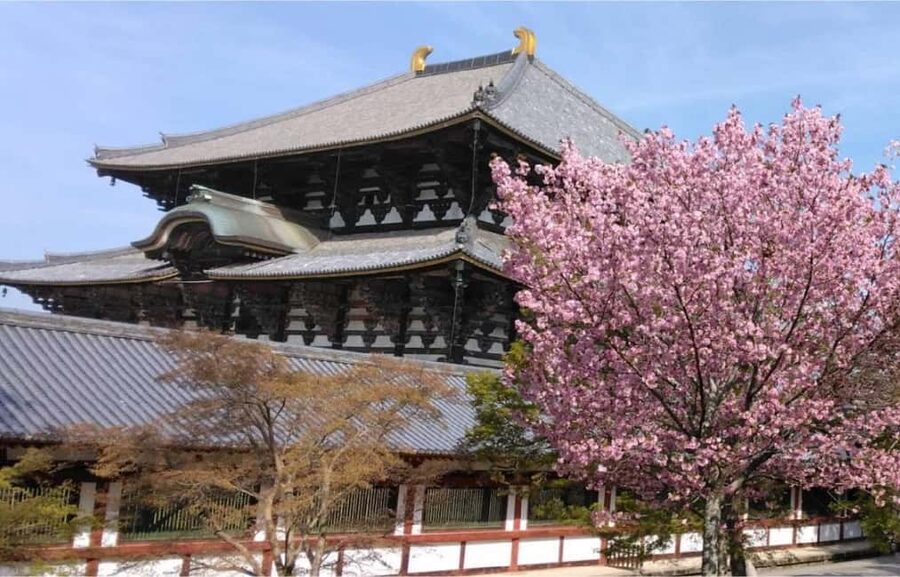
Todai-ji is the major paid sight in Nara. The temple is famous for the Great Buddha of Nara, housed in one of the world’s best-known wooden temple buildings. The scale is the point: after walking among small deer and trees, you enter a space built to make the visitor feel very small.
Admission is not included, so keep extra yen available. Your guide can explain the meeting time and route, but you will need to decide how much of your Nara time to spend inside. If the Buddha is your priority, go directly there rather than lingering too long with the deer.
The temple is also where the tight schedule becomes most obvious. You can see the central attraction and absorb the main hall, but a detailed visit with every surrounding feature would need more time. I would treat this as a strong introduction, not a complete study of Todai-ji.
Kasuga Taisha and its lanterns

Kasuga Taisha offers a different mood. Todai-ji is dominated by one enormous hall and statue, while this Shinto shrine is known for its thousands of bronze and stone lanterns. The approach through the trees feels quieter and more enclosed, with the lanterns giving the shrine its special character.
You may not have time to explore every path. That is worth knowing before you arrive, since the shrine grounds can invite slow wandering. Follow the guide’s timing and focus on the main approach, the lanterns, and the shrine atmosphere.
Together, Todai-ji and Kasuga Taisha make the Nara portion worthwhile. You see both Buddhist and Shinto traditions, plus the deer that have become part of Nara’s identity. The tradeoff is that the visit stays at an introductory level.
More spa and hot spring stops in Japan:
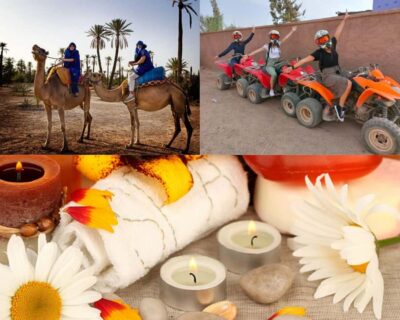
- From Marrakech: Camel Ride, Quad Bike & Spa Full-Day Trip
★ 4.7 · 473 reviews - Chiang Mai: Chiang Rai Famous Temples & Hot Springs Day Trip
★ 4.0 · 129 reviews - From Ponta Delgada: Lagoa do Fogo & Hot Springs Day Trip
★ 4.9 · 71 reviews - From Arequipa: Salinas Lagoon Full-Day Trip with Hot Springs
★ 4.0 · 62 reviews
Uji’s matcha streets and riverside character
After Nara, the coach continues to Uji. The ride is listed at about 80 minutes on the return, though traffic and weather can change the day’s timing. Uji itself receives around 90 minutes, so use the time with a plan.
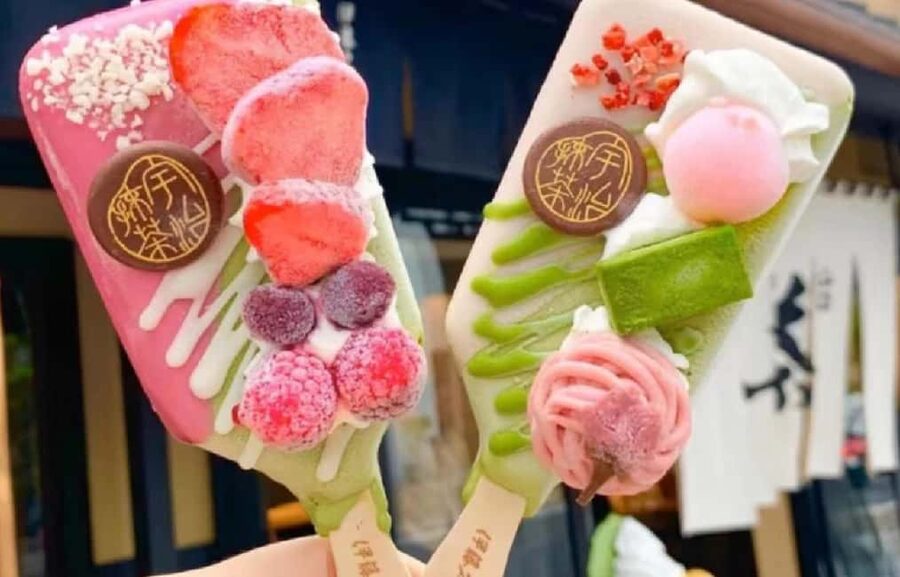
Uji is famous for matcha, and the shopping streets give you plenty of ways to try it. Matcha ice cream and cakes are the obvious choices, but look also for matcha-colored soba noodles and packaged tea products to take home. Vegetarian soba was specifically recommended by one guide, and food suggestions can make a short stop much easier to manage.
I like Uji because it balances the grand temples of Nara with ordinary pleasures: browsing shops, choosing a sweet, and walking toward the temple area. You do not need to purchase anything to enjoy it, but the stop works best if you are happy to sample food and browse rather than chase a long list of sights.
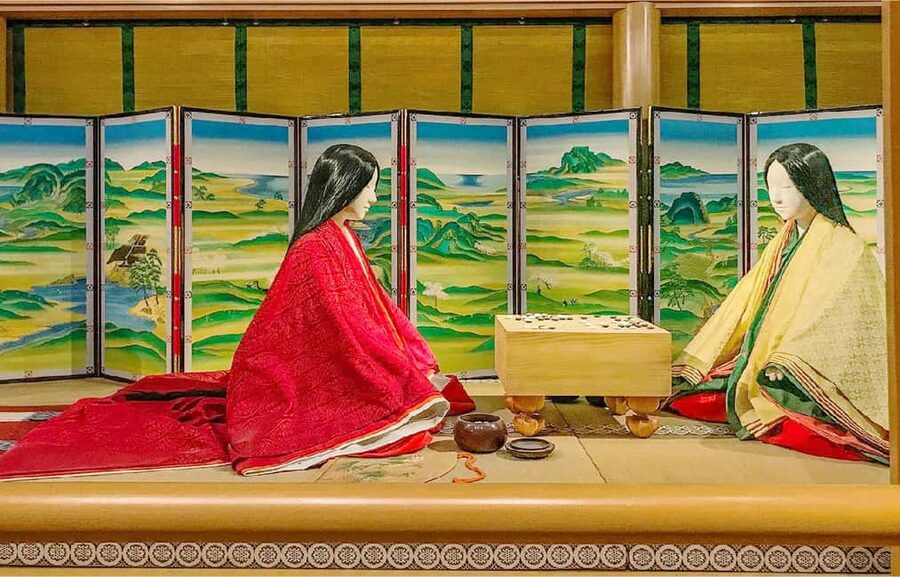
Uji also connects with Japanese literature. The final ten chapters of The Tale of Genji are set in the area. If that novel interests you, the setting adds another layer to the visit. If not, you can simply enjoy the streets, matcha, and river area without needing literary background.
Byodo-in or the Tale of Genji Museum
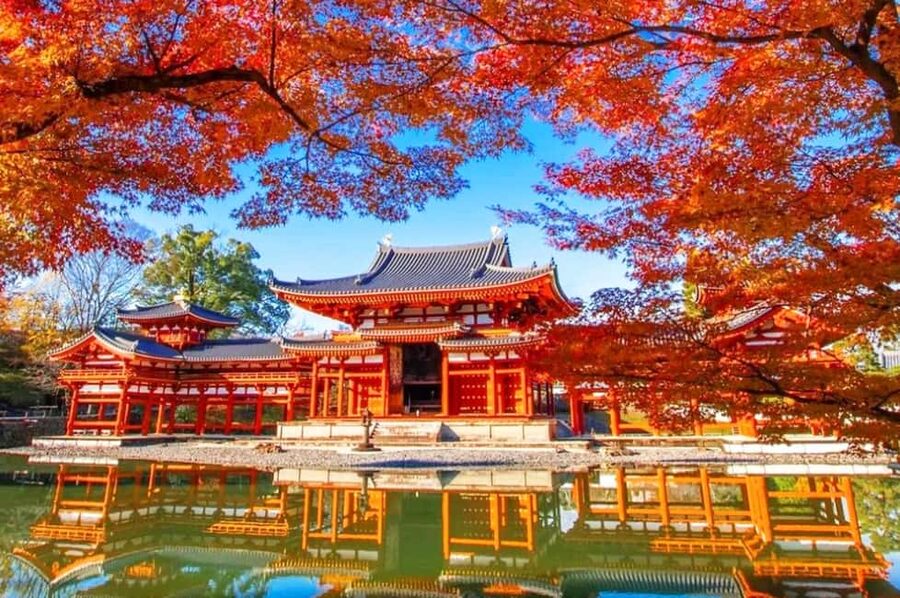
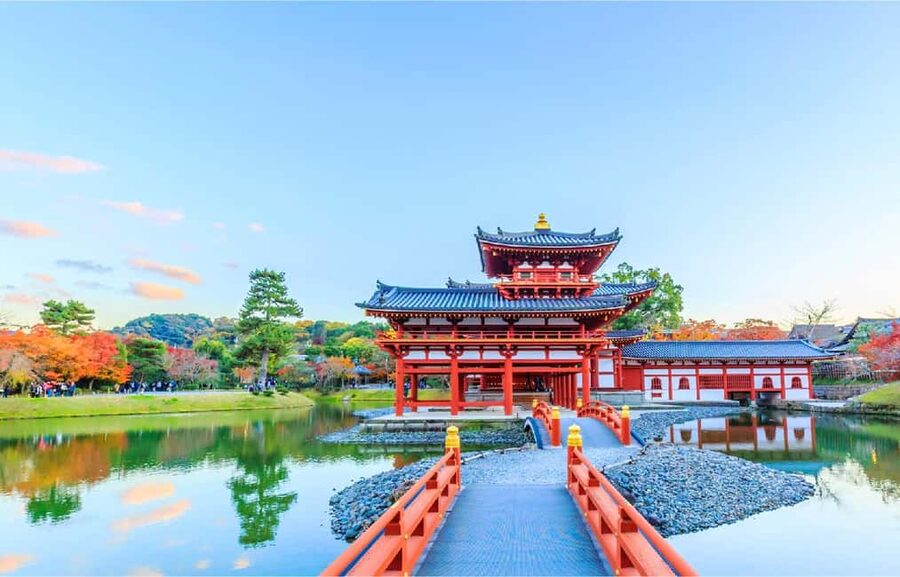
The Uji portion includes the chance to see Byodo-in and Byodo-in Omotesando, or choose the Tale of Genji Museum. Byodo-in is the stronger choice for most first-time visitors who want architecture and a classic Japanese setting. Its pond garden and Heian-era design make it one of Uji’s signature sights.
Admission to Byodo-in is extra. Because your time is limited, check the meeting point and return time before entering. A short visit can work well, but you should not assume you can see every building, browse the shopping street, and visit the museum at a relaxed pace.
The Tale of Genji Museum suits readers and anyone curious about Japanese literature. Its multimedia displays and high-definition visuals introduce the story and its appeal. It offers context rather than the visual impact of the temple, so your choice should depend on your interests.
One practical point: the supplied schedule names both Byodo-in Temple and the Tale of Genji Museum, but the experience is described as a choice between them. Confirm the day’s exact arrangement with your guide. Do not budget as if you will have unlimited time for both.
Ending at Genji no Yu hot spring
The final major stop is Genji no Yu, described as Uji’s only natural hot spring. Water is drawn from 1,111 meters underground, and the facility has three indoor baths and one outdoor bath. Traditional-style architecture gives the place a calm finish after a full day on foot.
This is not a sightseeing bath where you keep your clothes on. Japanese hot springs require you to bathe without clothing, and swimsuits are not allowed. If you have a tattoo, you may not be admitted, so check the rules before booking rather than treating the bath as a guaranteed part of the day.
You will have about one hour here. That is enough for a proper soak if you move through changing and washing efficiently, but it is not a full spa day. Some services may be available at the facility, yet they are not part of the stated tour price.
The order works well. Nara and Uji involve walking, standing, shopping, and outdoor time. Finishing with hot water gives you a chance to rest before the 80-minute coach ride back to Osaka. Several guides were praised for helping first-time onsen bathers understand the process, which can remove much of the uncertainty.
One person was disappointed after missing the hot spring, so treat this stop as something to protect. Listen carefully to the departure instructions and do not let shopping or temple visits run over.
What the $57 price really covers
At $57 per person, the tour offers solid value if you want transport between three separate experiences. The price includes the air-conditioned coach, round-trip transfers from the meeting point, guide and driver service fees, parking, taxes, and the deer crackers.
It does not include meals, drinks, Todai-ji admission, Byodo-in admission, or the onsen admission. Add those costs before deciding. Your food spending can be modest if you only want a snack, or higher if you try matcha desserts and noodles in Uji.
The biggest value is convenience. Reaching Nara and Uji independently is possible, but you would need to plan transport, watch train times, and arrange your own route between sights. Here, the coach handles the long connections, and the guide gives you enough direction to use limited free time well.
The price is less attractive if you prefer slow travel. You are paying for range, not long stays. A person focused only on Nara may get more satisfaction from spending a full day there. Someone who wants deer, temples, matcha, literature, and an onsen in one outing will likely find the cost easier to justify.
Timing, comfort, and guide quality
This is a long day, with a 10-hour schedule and several walking sections. The coach is helpful, but the day does not remove physical effort. Wear shoes you can use comfortably on uneven paths and bring what you need for changing weather.
The guides are a major part of the experience. Etta received repeated praise for energy, clear English, humor, and organization. Jessica was valued for practical explanations, Liao for clear communication, and Jack for sharing stories while keeping the group comfortable. Those details matter because a fast-moving day is easier when instructions are clear.
The style is not identical with every guide. Some may give more detailed commentary, while a small group may receive only basic explanations because the guide also drives. Keep expectations realistic: this is a guided day trip with free exploration, not a private specialist tour.
Traffic and weather can change the schedule. The operator advises against arranging another activity or transport immediately after the return. That is sensible advice. Keep your evening open, especially if you need to catch a train or make a dinner reservation.
Who should book this day trip?
I would choose this tour if you are staying in Osaka and want a simple first look at Nara and Uji without managing several train journeys. It suits first-time visitors, couples, families with older children, and anyone who likes a day with several distinct highlights.
It is also a good match for people who want some independence but appreciate a fixed route. You receive guidance, then time to choose food, photos, shopping, or a temple visit at several stops.
I would hesitate if you dislike group pacing, need extensive time at each temple, or have a tattoo that prevents hot spring entry. You should also think twice if compact coach seats and a long day of walking sound tiring.
Should you book it?
Book this tour if you want the broad Kansai sampler: deer in Nara, the Great Buddha, Kasuga’s lanterns, Uji matcha, a choice of cultural sights, and a hot spring finish. At $57, the transport and route planning make good sense.
Skip it in favor of a slower independent day if one place matters deeply to you. The tour gives you variety and convenience, but not endless time. Arrive early, wear good shoes, protect your onsen hour, and decide in advance whether Byodo-in or the Tale of Genji Museum matters more to you.
FAQ
Where does the tour meet in Osaka?
The meeting point is Harimaya Bld at 1-chōme-3-11 Nipponbashi, Chuo Ward, Osaka, 542-0073, in the Namba and Shinsaibashi area. The guide holds a yellow flag.
What time does the tour depart?
Departure is scheduled for 8:40 a.m. You should arrive at least 15 minutes early.
How long does the day trip last?
The stated duration is 10 hours. The schedule can change because of traffic or weather.
Are deer crackers included?
Yes. You receive a complimentary pack of deer crackers at the meeting point.
Are temple entrance fees included?
No. Admission to Todai-ji and Byodo-in is not included in the tour price.
Are meals and drinks included?
No. Meals and drinks are not included, so plan to pay separately for matcha treats, soba, and other food in Uji.
Can I enter the hot spring with a tattoo?
You may not be able to enter if you have a tattoo. The supplied information advises checking this before booking.
Can I wear a swimsuit in the hot spring?
No. Japanese hot spring bathing is done without clothing, and wearing clothing in the bathing area is not allowed.
What languages are available?
Live guiding is available in English, Japanese, and Traditional Chinese. The group may include people from several countries, so explanations can be given in multiple languages.
More 1-Day Tours in Japan
- Nara Half Day Trip Walking Tour (Private Option Available)
★ 5.0 · 937 reviews - Tokyo: Mt. Fuji, Kamakura, Big Buddha, & Lake Ashi Day Trip
★ 4.5 · 867 reviews - Mt Fuji Private Day Trip from Tokyo with English speaking driver
★ 5.0 · 846 reviews - Nagano: Snow Monkeys, Zenkoji Temple & Sake Day Trip
★ 4.9 · 833 reviews
Just added around Japan
- Tokyo Private Day Trip With English Speaking Driver★ 4.9 · 34 reviews
- Tokyo: Mount Fuji and Hakone Private Sightseeing Day Tour★ 4.9 · 76 reviews
- Tokyo: Mount Fuji 5th Station & Onsen Day Trip★ 4.3 · 75 reviews
- Tokyo → Nikko:Private Customizable Day Trip (English Driver)★ 4.9 · 26 reviews
- Tokyo: Onsen, Arts, and Nature Day Trip to Fuji and Hakone★ 5.0 · 66 reviews
- Tokyo: Nikko World Heritage Private Day Trip Hotel Pick-up★ 4.8 · 145 reviews
- Tokyo: A Half-Day Trip Bus Tour in the Morning★ 4.6 · 236 reviews
- From Tokyo:Mount Fuji&Hakone Customize Full Day Private Tour★ 4.8 · 27 reviews
Spa & Hot Springs, compared.
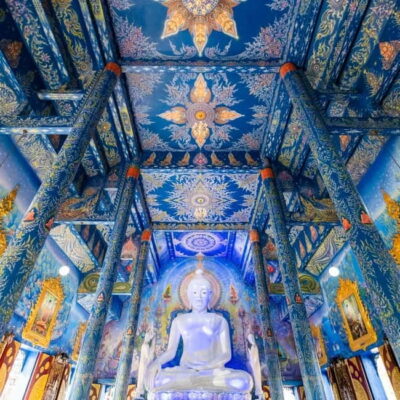
Chiang Rai Famous Temples & Hot Springs Day Trip
Read our review →
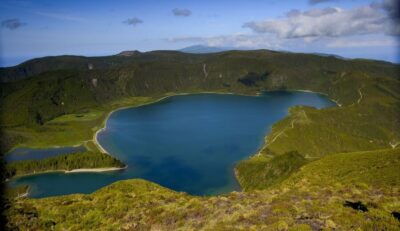
From Ponta Delgada: Lagoa do Fogo & Hot Springs Day Trip
Read our review →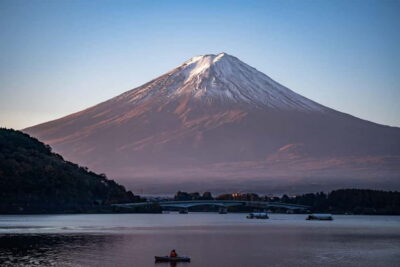
Onsen, Arts, and Nature Day Trip to Fuji and Hakone
Read our review →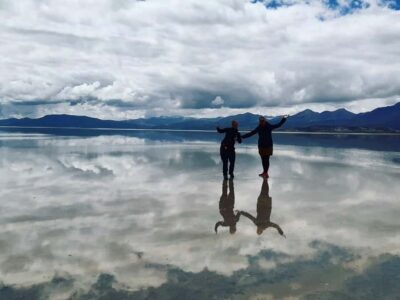
From Arequipa: Salinas Lagoon Full-Day Trip with Hot Springs
Read our review →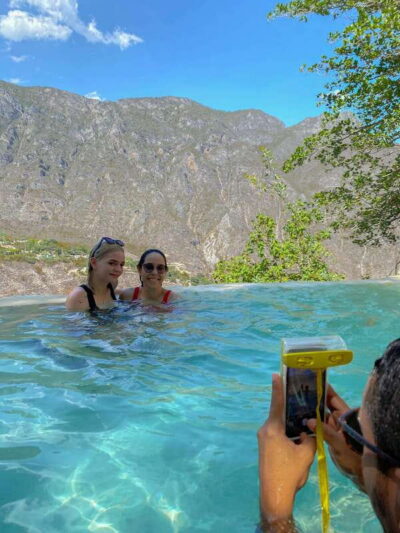
Sabah: Kota Kinabalu Park and Hot Spring Day Trip
Read our review →Browse the lists this tour appears in