
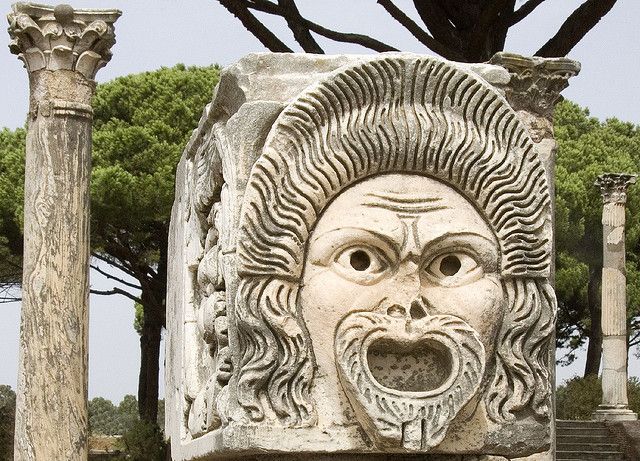
REVIEW · ROME
From Rome: Ostia Antica Guided Half-Day Trip by Train
Rome’s ancient port is an easy surprise. This four-hour outing takes you by local train from central Rome to Ostia Antica, where broad Roman streets, mosaics, baths, shops, warehouses, and an amphitheater make daily life easier to picture than at many grander ruins. I especially like the small group of up to 12 and the way the tour focuses on ordinary Romans, not only emperors and famous monuments. The main drawback is the amount of walking in an open archaeological park, with limited shade and uneven ground.
I also like the simple transport plan. Your guide meets you near Piramide Metro Station, provides the train tickets, and leads the group to the site. Guides such as Rob, Cat, Alberto, Laura, and Caterina have been praised for lively storytelling, clear explanations, and sensible pacing. Still, you should know that the return train is unescorted if you stay in Ostia after the guided visit, and this tour is not suitable for wheelchair users or baby strollers.
Five things to know before you book
- Ostia is Rome’s former harbor town: Its role as a commercial and military port helps explain how Rome was supplied and how people, goods, and ideas moved through the ancient world.
- The 15-minute train ride is part of the value: You avoid arranging a taxi or navigating the route alone, while still seeing a real suburban side of Rome.
- The main sights are wonderfully practical: The Forica, taverns, warehouses, Baths of Neptune, and amphitheater show how Romans worked, bathed, ate, watched shows, and handled everyday needs.
- A guide matters here: The site is large, and standing walls or faded mosaics do not always explain themselves. A good guide supplies the missing people, purposes, and stories.
- You can add a second stop: After the tour, you can remain at Ostia Antica, visit the modern town, go to the beach, or return to Rome on your own.
Why Ostia Antica makes a fine break from central Rome
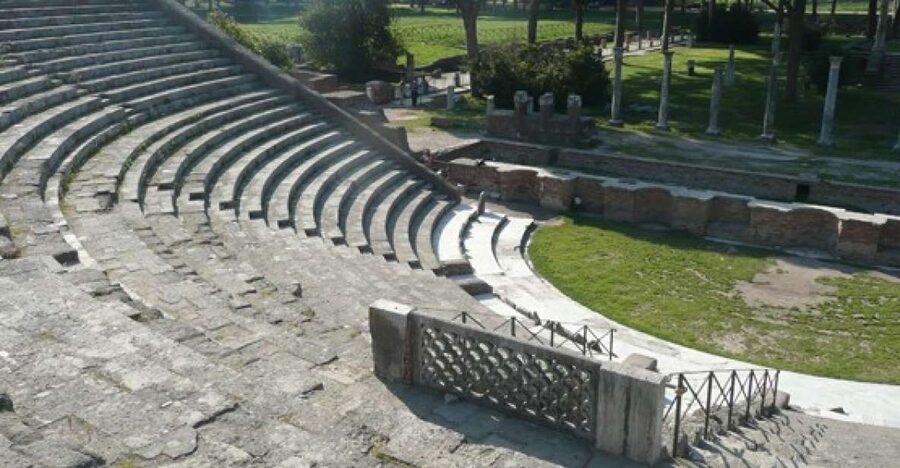
Ostia Antica was founded in the fourth century BC and grew into Rome’s major port. At its height, it was home to more than 100,000 people. That scale matters when you walk through it. You are not looking at one isolated temple. You are moving through a former city with working streets, apartment blocks, public buildings, commercial spaces, religious sites, baths, and entertainment venues.
I find Ostia especially useful for understanding the less glamorous side of Roman life. The Colosseum and Forum show power, politics, and spectacle. Ostia shows how a city functioned from morning to night. You can see where goods were stored, where people washed, where they used public toilets, and where crowds gathered for performances.
The site also tends to feel calmer than Rome’s central monuments. Several people who took the tour described Ostia as much quieter than Pompeii, sometimes nearly empty. That is not guaranteed on every date, but the setting generally offers more breathing room than the Colosseum or Trevi Fountain.
The comparison with Pompeii is worth handling carefully. Pompeii has the drama of a city stopped suddenly by volcanic ash. Ostia offers a broader view of an urban port that changed and declined over time. If you have already visited Pompeii, Ostia should not feel like a repeat. If Pompeii is not on your schedule, Ostia gives you a strong Roman-city experience without the longer journey from Rome.
More Train Day Trips in Italy
- Ancient Ostia Antica Semi-Private Day Trip from Rome by Train with Guide
★ 4.5 · 579 reviews - Venice Day Trip from Rome by High-Speed Train with Happy Hour
★ 4.5 · 445 reviews - From Rome: Day Trip to Venice by High-Speed Train
★ 4.6 · 352 reviews
Meeting at Piramide and taking the train
The meeting point is Cafe Piramide at Piazzale Ostiense, 9. When you face the Piramide Metro Station on Line B, the cafe is on your right, close to the train tracks and train exit. Look for the white umbrellas and the City Wonders sign.
This is a practical location, but allow enough time to find it. The cafe is near the station rather than inside a grand, obvious tourist plaza. One useful detail is that white umbrellas across the street can pull your attention in the wrong direction, so check carefully on the right side as you face the metro stop.
Once the group is together, the guide distributes return train tickets and explains the short journey. The outward train takes about 15 minutes. That makes Ostia one of the easier ancient sites to add to a Rome stay. You are not spending half your day in a coach or dealing with a distant station.
The guide accompanies you to Ostia Antica and keeps track of the group during the transfer. Several guides have been praised for making sure everyone boarded safely, which is reassuring if you are unfamiliar with Rome’s transport system. In the unusual event of a public transport strike or another unforeseen transport problem, a minibus is provided at no extra cost.
Walking the Decumanus Maximus
The guided visit at Ostia lasts about three hours. The central route follows the Decumanus Maximus, the city’s main thoroughfare. Walking along this broad ancient street gives you a useful sense of scale. Roman citizens used this route for business, errands, religious activity, and ordinary movement across town.
Your guide will point out statues, shops, taverns, thermal baths, warehouses, and theaters. The walls are often the real stars. They help you picture buildings with multiple levels, rather than seeing the ruins as low piles of stone. One particularly helpful explanation from the guiding team is the connection between architecture and daily routine: a building’s location, size, and fittings reveal what happened there.
This is where the small group helps. With no more than 12 people, it is easier to hear the guide and ask questions. Guides including Rob, Cat, Alberto, Laura, and Caterina have received strong praise for mixing facts with stories, humor, photographs, and occasional acting. The names of your exact guide are not guaranteed, but the strongest part of the experience is clearly the person leading it.
The route is not a rapid checklist. The better guides keep people moving while stopping at the sites that explain Ostia best. You may also receive short pauses to look around independently. That balance matters because three hours of uninterrupted commentary can become tiring, while too much free time leaves you staring at walls without context.
The Baths of Neptune and Roman public life
The Baths of Neptune are one of the visual highlights. Their mosaic shows the sea god being pulled by a four-horse chariot. It is unusually easy to imagine the original setting here because the mosaic remains so striking and the building gives it a proper sense of place.
The baths were not simply places to get clean. Roman bath complexes were social spaces, part of the rhythm of urban life. Your guide can connect the mosaic, rooms, and public setting to the wider culture of Ostia. This makes the stop more useful than a quick look at a decorative floor.
The site contains other traces of ordinary commerce and domestic life. Taverns and warehouses bring the port economy into view, while thermal baths show how public amenities shaped the city. You may find original frescoes, mosaics, statues, and architectural details still in place. The preservation is strong enough to make the city feel legible, though the open setting and age of the ruins mean some areas are worn or incomplete.
More Train Day Trips in Rome
- From Rome: Pompeii and Naples Day Trip by High-Speed Train
★ 4.7 · 234 reviews - From Rome: Positano & Amalfi Coast Day Trip by Train & Ferry
★ 4.6 · 225 reviews - From Rome: Day Trip to Florence by High-Speed Train
★ 4.7 · 44 reviews
The Forica, where ancient life gets very direct
The communal Forica is one of the tour’s most memorable stops because it is so ordinary. In a large open room, a marble bench has 20 evenly spaced openings along four walls. This was a public washroom, and it gives you a blunt reminder that ancient life involved the same practical needs as modern life.
It is also the sort of place that a self-guided visit might pass without much thought. A guide can explain what you are seeing and why it matters. The Forica turns a distant civilization into a collection of people who ate, worked, bathed, socialized, and dealt with very basic bodily needs.
The tour includes a toilet break, with time for a snack or drink at the site snack bar. That pause is useful because the archaeological park is large and the Italian sun can be strong, especially in late spring and summer.
Taking a seat in the amphitheater
The amphitheater was built in 12 BC and could hold about 3,500 spectators. Sitting or standing in the seating area gives you a good feel for the relationship between the stage and the crowd.
This is not the Colosseum, and that is part of its charm. The smaller size makes it easier to picture a local audience gathering for a performance. Your guide can help you connect the surviving structure to the sounds, movement, and social energy of a Roman show without turning the stop into a dry architectural lecture.
The amphitheater also shows why a guided visit works well at Ostia. You can recognize the shape of the building, but the scale, date, and purpose become much clearer when someone explains them on the spot.
How the three-hour tour feels on foot
Expect a substantial walk over uneven archaeological ground. Comfortable shoes are essential. Sports shoes are a sensible choice, and you should bring water even though there is a snack stop.
There is limited shade across parts of the site. In hot weather, guides such as Alberto have been praised for seeking out shaded areas, but you should still bring sun protection and plan for heat. A towel and beachwear are specifically suggested if you intend to continue to the coast.
The tour is not suitable for wheelchair users, and baby strollers are not allowed. The open spaces may look easy from a distance, but ancient streets, rough surfaces, and the size of the park make mobility a real consideration.
The pace is generally described as steady rather than rushed. That is important for families and older visitors, though anyone expecting a relaxed cafe-and-monument morning should understand that this is an active walking tour.
Staying on at Ostia or adding the beach
At the end of the guided portion, you have choices. You can continue exploring the archaeological park, visit the modern town of Ostia, head to a nearby beach, or return to Rome.
Some people find staying on especially worthwhile because the site is large. The guided route focuses on major areas, but extra time lets you revisit places that caught your attention. There is also a museum inside the archaeological park. Opening hours can vary, and one winter visit found it closing around 1:30 PM, so check the timing on your date if the museum matters to you.
The beach option gives the morning a different ending. It is not part of the guided archaeological tour, and you arrange the onward portion yourself, but it can work well in warm weather. Bring beachwear and a towel if you plan to make the most of it.
If you remain in Ostia, your return journey is unescorted. The train tickets are provided, and the guide explains how to get back to the Piramide area, but you will be responsible for following the instructions. The organized service ends in Rome at Piramide Metro Station at about 1:00 PM.
Is the $58 price fair?
At $58 per person, the tour is reasonably priced for a four-hour guided outing. The fee includes the return train ticket, entry to Ostia Antica, and an English-speaking guide. You are paying for more than transport, since admission and the interpretation of a large site are included.
You could spend less by arranging the train and entrance yourself, but that saves money at the cost of time and context. Ostia’s ruins are spread over a large area, and the purpose of many buildings is not immediately obvious. For a first visit, the guide is the main value.
I would be less enthusiastic about the price if you wanted a slow, private exploration or a full-day archaeological study. Three hours on site is enough for the major highlights, but not enough to examine every street, building, and museum display at length. The small group and strong guide reports make the cost easier to justify.
Free cancellation up to 24 hours before departure and the option to reserve now and pay later also reduce the risk of fitting this into a changing Rome schedule.
Who should book this Ostia Antica tour?
I would choose this for anyone interested in how ordinary Romans lived, worked, and moved goods. It is particularly good for first-time visitors who want an ancient site beyond the usual central Rome circuit.
Families can benefit from the stories and visual examples, though children need to be comfortable walking for several hours. The guides have been praised for keeping both adults and younger people engaged.
I would also recommend it after a visit to Pompeii if you want a different Roman setting. Ostia is less about catastrophe and more about the working life of a port city. History students, architecture fans, and people who dislike packed attractions should find plenty to like.
I would skip it if you have limited mobility, want air-conditioned transport, or prefer a short visit with lots of seating. The site is open, spread out, and exposed in places.
Final verdict: Should you book it?
Yes, if you want a well-organized way to reach one of Rome’s most rewarding ancient sites. The train ride is short, the ticket price covers the essentials, and the small group makes it easier to hear the guide and ask questions.
The guide can make or break the morning, and the strongest names associated with this tour include Rob, Cat, Alberto, Laura, Caterina, and Roberto. You cannot request that a particular guide will lead your departure, but the repeated praise for clear storytelling, humor, safety, and pacing is encouraging.
Book it when you want Roman history at street level. Leave extra time afterward if you hope to visit the museum, explore more ruins, see modern Ostia, or go to the beach.
FAQ
How long does the Ostia Antica tour last?
The full experience lasts about four hours. The guided visit at Ostia Antica takes about three hours, with train travel included.
Where is the meeting point?
Meet at Cafe Piramide at Piazzale Ostiense, 9. When facing Piramide Metro Station on Line B, the cafe is on your right near the train tracks and train exit. Look for white umbrellas and the City Wonders sign.
How do I reach Ostia Antica?
The group travels by train from central Rome. The outward journey takes about 15 minutes, and the guide accompanies you to the archaeological site.
Is the return train journey guided?
The guide accompanies the group on the organized return to Rome. If you stay in Ostia after the tour, your later return journey is unescorted, though your train ticket and return instructions are provided.
What does the price include?
The $58 price includes return train tickets from Rome to Ostia Antica, entry to the archaeological site, and an English-speaking guide.
Is the tour available in languages other than English?
The listed live tour language is English.
Can I visit the beach afterward?
Yes. You can remain in Ostia, explore the modern town, or go to a nearby beach after the guided portion. Bring beachwear and a towel if you plan to do this.
What should I wear and bring?
Wear comfortable shoes or sports shoes. Bring a towel and beachwear if you intend to visit the coast. The tour also includes a toilet break and time for a snack or drink.
Is the tour suitable for wheelchair users or baby strollers?
No. The activity is not suitable for wheelchair users, and baby strollers are not allowed.
More half-day trips in Rome
- Hadrian’s Villa and Villa d’Este Half-Day Trip from Rome
★ 3.5 · 808 reviews - Athens: Cape Sounion & Poseidon Temple Sunset Half-Day Trip
★ 4.8 · 8,241 reviews - From Nice: Eze, Monaco, & Monte-Carlo Half-Day Trip
★ 4.5 · 5,642 reviews - From Paris: Giverny, Monet’s Home & Gardens Half-Day Trip
★ 4.5 · 2,887 reviews
More train rides in Rome
- From Milan: Bernina Train and St. Moritz Day Trip
★ 4.5 · 4,495 reviews - Bangkok: Damnoen Saduak, Train Market & Mahanakhon Day Trip
★ 4.7 · 2,162 reviews - From Munich: Salzburg Day Trip by Train
★ 4.7 · 1,547 reviews - Day Trip to Bangkok Floating Market & Maeklong Railway
★ 5.0 · 1,528 reviews
Just added around Rome
- From Rome: Hadrian’s Villa & Villa d’Este Day Trip & Lunch★ 4.5 · 157 reviews
- Day trip Rome by car : Tivoli Unesco Villa D’este & Hadrian★ 5.0 · 56 reviews
- Sorrento & Pompeii Day Trip from Rome Audio Guide Tour★ 4.2 · 50 reviews
- Day Trip from Rome: Explore Pompeii & Sorrento Amalfi Coast★ 4.8 · 160 reviews
- From Rome: Positano & Amalfi Coast Day Trip by Train & Ferry★ 4.6 · 225 reviews
- From Rome: Ponza Island Day Trip with Boat Excursion★ 4.7 · 278 reviews
- From Rome: Positano, Amalfi Coast and Sorrento Day Trip★ 4.5 · 509 reviews
- From Rome: Pompeii and Vesuvio Guided Day Trip with Lunch★ 4.3 · 126 reviews
Day Trips from Rome, compared.
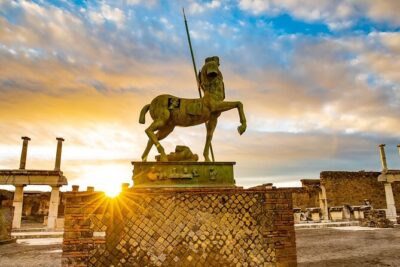
Pompeii, Amalfi Coast and Positano Day Trip from Rome
Read our review →
Pompeii and Mount Vesuvius Day Trip from Rome with Pizza Lunch
Read our review →
Tuscany & Montepulciano Day Trip with Lunch & Wine Tasting
Read our review →
Pompeii Day Trip with Optional Vesuvius and Lunch
Read our review →
Amalfi Coast & Positano Day Trip with Coastal Cruise
Read our review →
Tuscany & Montepulciano Day Trip with Lunch & Wines
Read our review →Browse the lists this tour appears in