
REVIEW · TBILISI
Chiatura: Journey Through Time – Day-trip Adventure
Georgia’s Soviet past rides above a gorge. This 10-hour private trip from Tbilisi combines the Katskhi Pillar with Chiatura’s old manganese-mining town, giving you medieval religious sites, brutalist buildings, and working cable cars in one long day. I like the personal pace, especially since guides such as Alex, Jonah, and Aleksi have adjusted stops for photos, coffee, and individual interests. I also like the mix of history and scenery, from the 40-meter limestone pillar to Chiatura’s steep valleys.
The main drawback is the road time. You spend much of the day in a car, and some cable car lines may be closed or under repair. At $104 per person, the price makes good sense for a private vehicle, guide, hotel pickup, and cable car ride, but it is less attractive if you want a relaxed day with only a few stops.
Five things to know before booking
- The cable cars are working history: Chiatura still uses parts of a Soviet ropeway network built to move residents and manganese through the town.
- Katskhi Pillar adds a medieval surprise: A reconstructed eighth-century church and a solitary monk make this far more than a photo stop.
- The tour is private: Your guide can spend more time on mining, religion, photography, or Soviet Georgia, depending on what interests you.
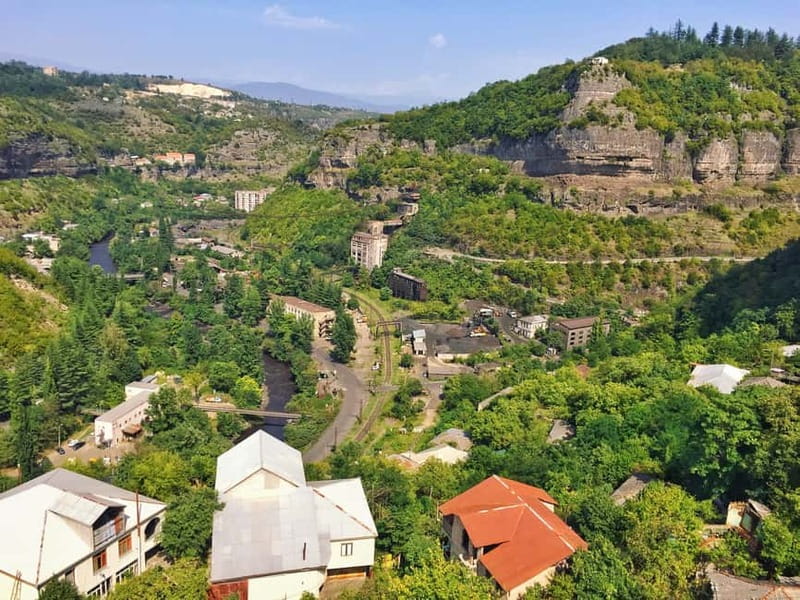
- The setting is dramatic: Chiatura sits among steep valleys and deep gorges, giving an industrial town an unexpectedly striking backdrop.
- Bring sensible clothing: Comfortable shoes, sunscreen, sunglasses, and a sun hat matter. The tour is not suitable for wheelchair users, people with back problems, or children under 120 centimeters.
Why Chiatura makes such an unusual day trip
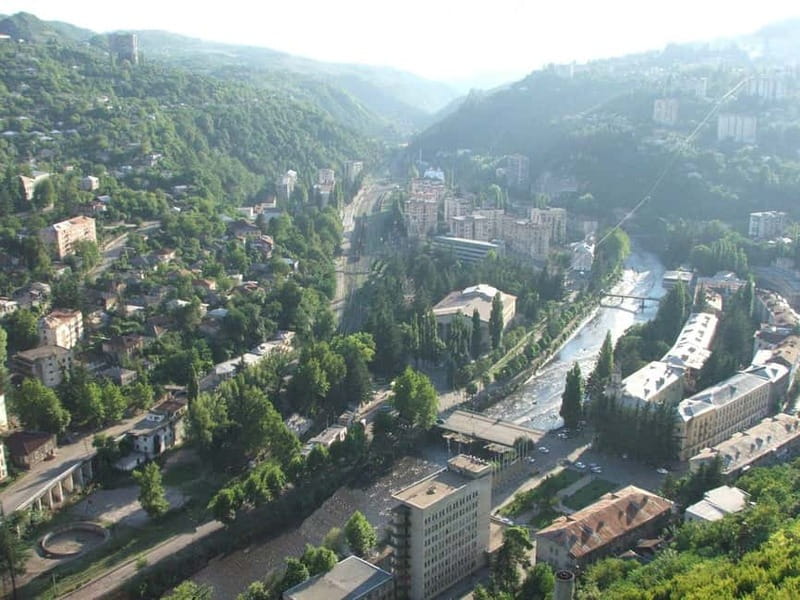
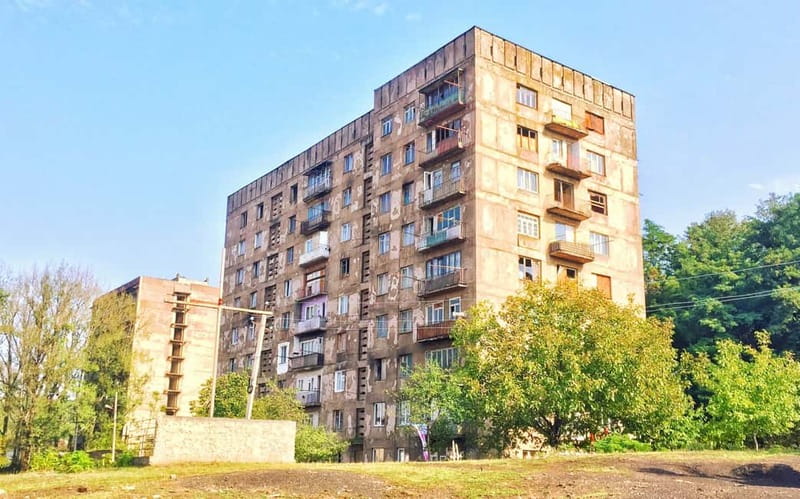
Chiatura is not a polished sightseeing town. That is its appeal. Founded in the late 1800s, it grew around manganese mining, and the industry shaped everything from its transport system to its buildings and location. The town was built among steep valleys and narrow gorges, where ordinary roads could not always move workers efficiently.
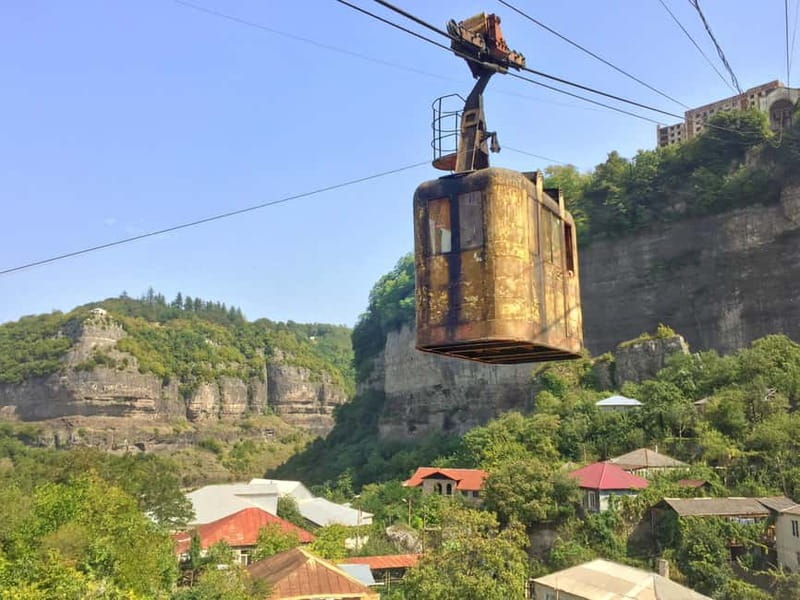
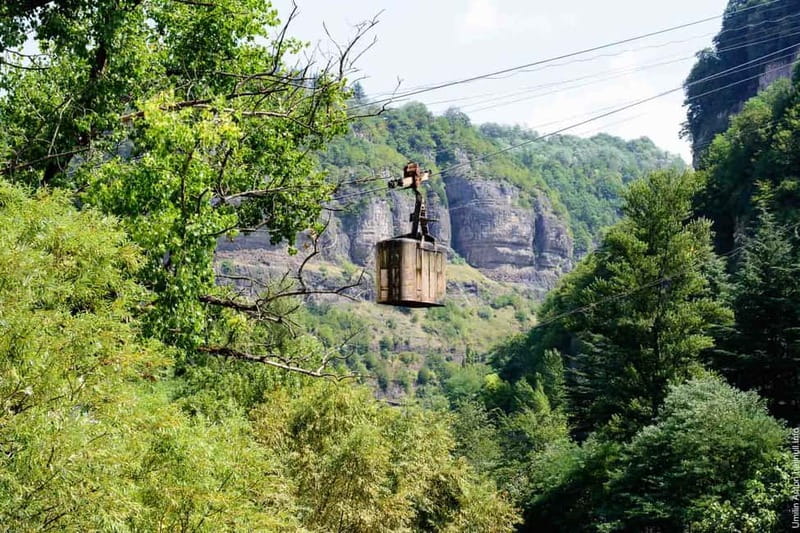
The answer was a huge cable car network. At its height, Chiatura had more than a dozen passenger ropeway lines and two cargo lines for manganese. Together, the cableways stretched for more than 6,000 meters.
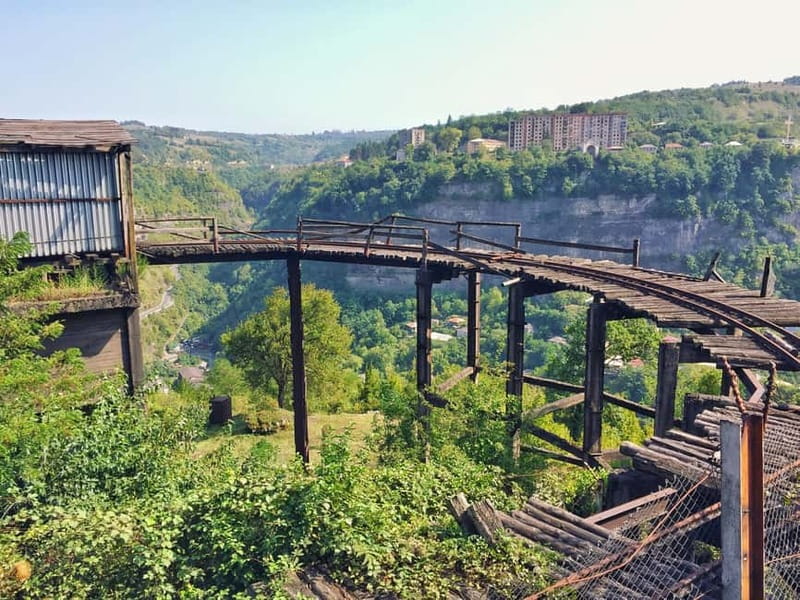
Some lines remain in operation, although not all are available at every visit. You may ride one of the working cars with local residents, or you may see a station and machinery without boarding. The uncertainty is worth knowing before you go. This is not a theme-park ride with a guaranteed schedule and freshly painted cabins. It is a living piece of transport history, and repairs or closures are part of the experience.
I like that distinction. The cable cars are valuable because they still belong to the town. You are not simply being shown a museum object. At the same time, anyone expecting a full circuit of every line should lower those expectations.
A few more day trips from Tbilisi worth a look
- Tbilisi: Day Trip to Kazbegi, Gudauri, Gergeti, and Ananuri
★ 4.9 · 3,203 reviews - Day Trip to Kakheti Wine Region Including 9 Wine Tastings
★ 5.0 · 2,774 reviews - Day Trip to Kazbegi and Gudauri
★ 5.0 · 2,009 reviews
From Tbilisi to the first coffee stop
Pickup is available from accommodation in Tbilisi or Gori. The day begins in the morning and ends with a return to your accommodation, making this a straightforward option if you are based in the capital and do not want to arrange a separate driver.
The first stop is a local bakery. You get about 15 minutes for coffee, tea, breakfast, or a local snack. This is a small but useful touch, especially because the day is long and lunch comes later. Do not treat it as a full scheduled meal unless you choose to buy enough food there.
The private format matters most on the road. Past guests have praised drivers such as Pancho and David, as well as guides who made extra photo stops and adjusted breaks when possible. That flexibility can make a 10-hour trip feel much less rigid. You can ask questions as the countryside changes, stop for a picture, or take a short pause without waiting for a large group.
The drive is also the part that requires patience. Chiatura and the Katskhi Pillar are far enough from Tbilisi that this is a full-day commitment, not a quick side trip. A comfortable car helps, and the tour includes mineral water, but people with back problems should choose another outing.
Katskhi Pillar and its solitary monastery
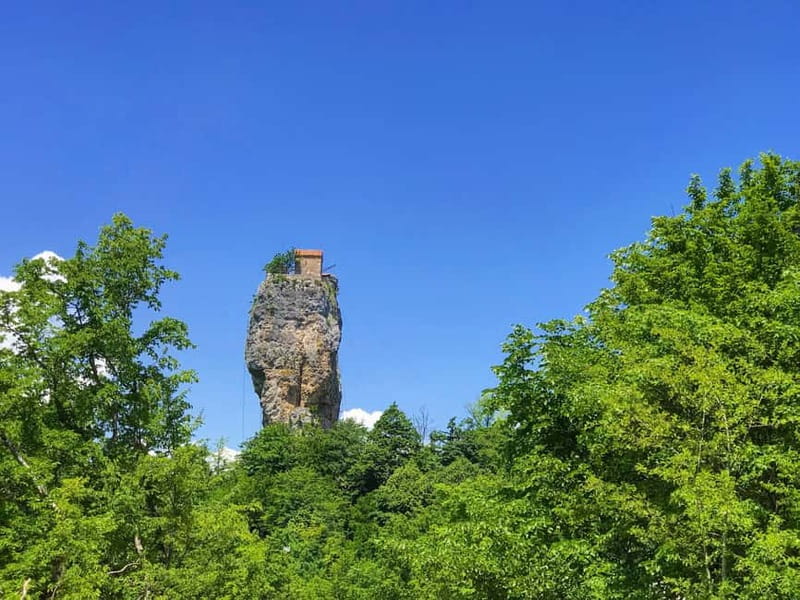
The Katskhi Pillar is one of Georgia’s most memorable sights because the setting feels almost unreal. A natural limestone monolith rises about 40 meters above the Karshuna River gorge. At its top sits a reconstructed eighth-century church and a small monastery.
The site is tied to a monk named Maxime, who has lived there in solitude and silence for more than 25 years. That detail changes the way you see the pillar. It is not only a striking rock formation. It is also a place of continuing religious practice, with a human story that reaches beyond the photo.
Your visit is listed as a guided stop of about 45 minutes. Expect time for views, explanation, and photographs rather than a long hike up the pillar. The supplied details do not promise access to the top, so you should think of Katskhi as a viewpoint and cultural visit from below.
Wear shoes with a good grip. The tour does not describe difficult walking, but comfortable footwear is still important for moving around outdoor viewing areas. Sunglasses, a hat, and sunscreen are also sensible, since shade and shelter are not guaranteed at every stop.
I especially like how the pillar breaks up the industrial focus of the day. You begin with medieval Georgia and religious life, then move toward mining, Soviet transport, and modern urban change. That range gives the outing more depth than a simple abandoned-building tour.
Mgvimevi Convent and the religious side of Chiatura
Mgvimevi Convent is another important stop, with about 45 minutes for sightseeing and views. Its location is part of its character. The religious sites around Chiatura are not always easy to reach, and the difficult settings add to the sense that these places were chosen for quiet and separation.
The convent also helps place Chiatura in a longer Georgian story. The town is often described through manganese and Soviet engineering, but it exists in a country with an old Orthodox tradition and dramatic religious architecture. The convent gives your guide a chance to explain that side of the region.
The stop may suit you if you enjoy places with atmosphere and context rather than a quick checklist of attractions. If your main goal is industrial archaeology, you may find the convent slower than the cable car stations. I would still keep it in the day, since the contrast improves the overall experience.
Same base, a completely different day out:
- Day Trip to Mtskheta Gori and Uplistsikhe
★ 5.0 · 1,801 reviews - Day Trip to Armenia Including Homemade Lunch
★ 5.0 · 1,162 reviews - From Tbilisi: Diamond Bridge and Dashbashi Canyon Day Trip
★ 4.9 · 740 reviews - From Tbilisi : Mtskheta, Jvari, Gori & Uplistsikhe Day Trip
★ 4.8 · 432 reviews
The old cable car station and Chiatura’s Soviet past
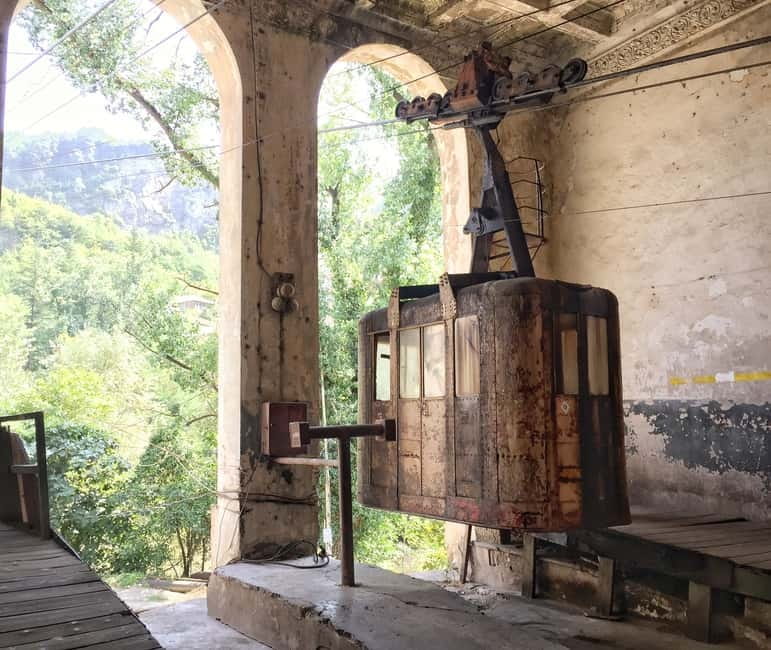
The old cable car station is one of the tour’s strongest stops. You get about 30 minutes with a guide, enough time to examine the structure and hear how the ropeway system fitted into daily life.
Chiatura’s cable cars were built to connect parts of the town spread through difficult valleys. They also served the manganese industry, with cargo lines moving materials. The network was not a decorative extra. It was practical infrastructure, built around the needs of mining and workers.
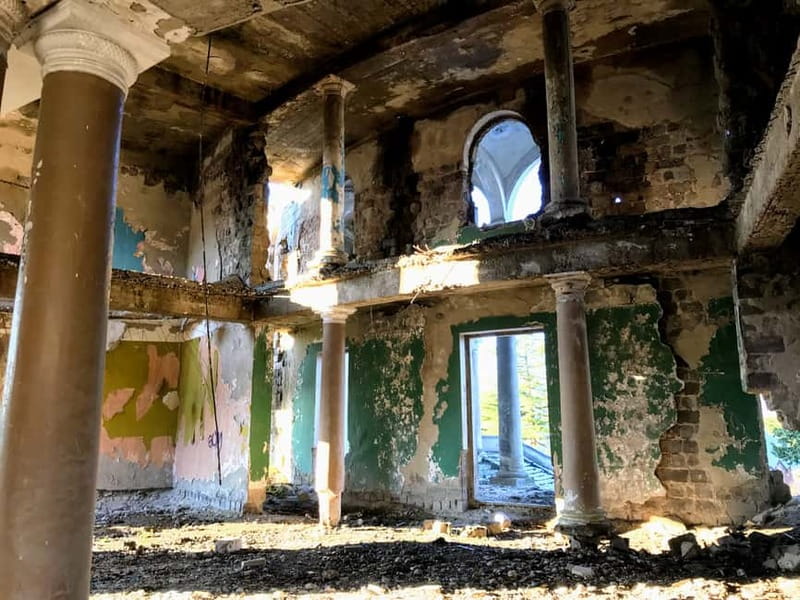
The old stations and surrounding architecture show a harder, more utilitarian side of Soviet Georgia. You may find concrete forms, worn surfaces, and machinery that feel far removed from the neat Soviet monuments often shown in capital cities. The appeal is not prettiness. It is seeing how a town was organized around work.
The Central Cable Car Station gets another 15-minute visit later in the day. This gives you a second look at the system from a different point and may include a ride if a suitable line is operating. The included cable car ride is a major part of the price, but exact access depends on which lines are open.
Chiatura Memorial, public buildings, and local viewpoints
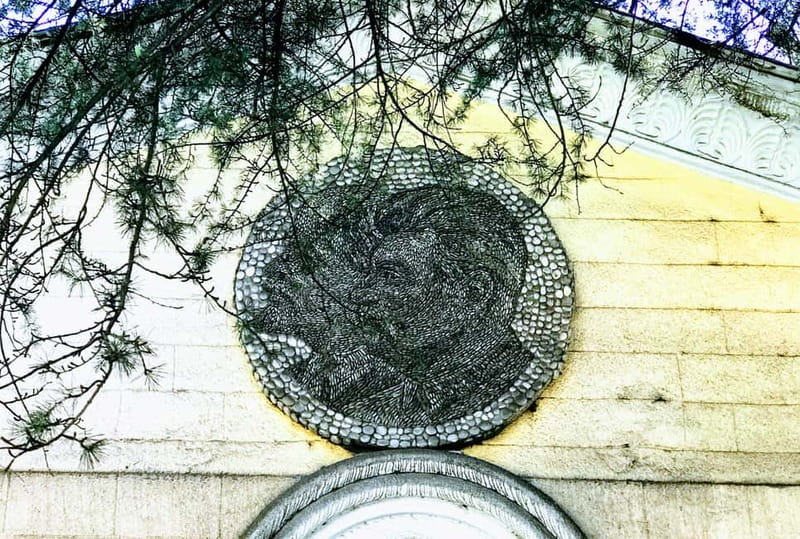
The Chiatura Memorial is a brief 15-minute photo stop. It is not a long museum visit, but it adds another public marker to the town’s story and gives you a chance to see more of Chiatura between the main sites.
The former Palace of Youth and Students gets around 10 minutes. Its Soviet-era design fits the town’s wider collection of practical, monumental buildings. The visit is short, so think of it as a visual introduction rather than a full architectural study.
At Temur Magradze Stadium, you get about 25 minutes for a guided visit and sightseeing. A stadium may sound ordinary, but in a former industrial town it helps show the civic life built around local communities and workplaces. This is the kind of stop that rewards curiosity. You are looking at how people lived and gathered, not only at famous monuments.
The schedule includes several photo stops, but the exact rhythm can change. The guide may spend more time at a site if you have a strong interest in Soviet architecture, or move along if you prefer the views and cable cars. That is one of the better reasons to pay for a private excursion.
Lunch and the value of a private guide
Lunch takes place at a local café and lasts about one hour. Regional food is included in the schedule, but lunch is not included in the $104 price. Plan to pay separately, and ask your guide about the available choices if you have dietary concerns.
The lunch stop gives the day a needed pause. After several historical sites and outdoor stops, sitting down matters. It also keeps you from having to carry a full meal from Tbilisi, although a bakery snack in the morning is still wise.
The guide is where this tour earns much of its value. Past visitors have singled out Alex, Jonah, and Aleksi for clear explanations, personal stories, patience, and flexibility. One guide was praised for answering every question and suggesting useful ideas for the rest of a Georgia trip. Another made room for unusual photo stops, coffee breaks, and individual requests.
Those details matter more here than they would on a simple city walking tour. Chiatura is not self-explanatory. Without context, you see an aging cable car station, a concrete building, or a mine-related town. With a good guide, you understand how manganese shaped the town and why the ropeways were so important.
You should still be realistic. A guide cannot guarantee access to every cable car, and ten hours cannot turn Chiatura into a slow, detailed study of every building. The strength is the broad picture, delivered in a day.
Is $104 per person good value?
For a private 10-hour trip, $104 per person is a fair price, especially if you are traveling with family or friends and can share the vehicle. The rate covers hotel pickup and drop-off, an English or Russian-speaking guide, transport, the sightseeing program, mineral water, and a cable car ride.
It does not cover lunch. You also need to consider the cost of spending a full day away from Tbilisi, though that is not an extra charge.
The value is strongest if you care about interpretation and convenience. You do not need to work out the route to a remote town, coordinate the pillar and convent, or figure out which cable car station to visit. You also get a guide who can explain the link between mining, transport, Soviet planning, and modern Georgia.
The value is weaker if you mainly want a guaranteed cable car ride on several lines. Some routes are closed or under repair, and the tour cannot change that. Ask about current cable car conditions before departure if riding is your top priority.
Who should book this Chiatura trip?
I would recommend it to you if you enjoy unusual places, industrial history, Soviet architecture, religious sites, and strong scenery. It suits curious adults and older children who can handle a long day in a car and several stops on foot.
It is also a good choice if you want a private tour rather than a large coach. The guide can explain details at your pace, and the driver can handle the long route from Tbilisi or Gori.
You should think twice if you need step-free access, have back problems, use an electric wheelchair, or are traveling with a baby carriage. The activity is not suitable for wheelchair users, electric wheelchairs, pets, alcohol or drugs, or children under 120 centimeters.
Bring comfortable shoes, sunglasses, a sun hat, sunscreen, and a phone or camera. Mineral water is supplied, but the bakery stop and lunch are your practical food breaks.
Final verdict: a strong choice for curious explorers
Book this tour if you want Georgia beyond the standard churches, wine routes, and capital-city sights. Chiatura gives you a rare look at a town shaped by manganese, Soviet engineering, and a harsh gorge setting. Katskhi Pillar and Mgvimevi Convent add spiritual and medieval depth.
I would not book it for a slow scenic day or a guaranteed tour of every cable car line. The schedule is long, some stops are brief, and repairs can affect the ropeway experience. But if you value a well-informed guide, private transport, unusual history, and the chance to see a less polished side of Georgia, $104 is a sensible spend. Flexible cancellation up to 24 hours before departure and the option to reserve now and pay later also make planning easier.
FAQ
Where does the Chiatura and Katskhi Pillar tour depart from?
Pickup is available from accommodation in Tbilisi or Gori.
How long does the tour last?
The experience lasts about 10 hours, including the journey, sightseeing stops, lunch, and return to Tbilisi or Gori.
Is this a private tour?
Yes. The tour is arranged for a private group.
Which languages does the guide speak?
Live guiding is available in English and Russian.
Is hotel pickup and drop-off included?
Yes, hotel or accommodation pickup and drop-off are included for private tours in Tbilisi or Gori.
Is lunch included in the price?
No. Lunch at a local café is part of the schedule, but you pay for it separately.
Can I ride the Chiatura cable cars?
A cable car ride is included, but some lines may be closed or under repair. Riding every line is not guaranteed.
What should I bring?
Bring comfortable shoes, sunglasses, a sun hat, and sunscreen. Mineral water is provided.
Is the tour suitable for wheelchair users or people with back problems?
No. The activity is not suitable for wheelchair users or people with back problems. It is also not suitable for children under 120 centimeters.
Just added around Tbilisi
- Tbilisi: Vardzia, Khertvisi, Rabati & Borjomi Day Trip★ 4.8 · 24 reviews
- From Tbilisi: Guided Day Trip to Ananuri, Gudauri, & Kazbegi★ 4.7 · 341 reviews
- From Tbilisi: Kakheti & Sighnaghi Guided Day Trip with Wine★ 4.3 · 103 reviews
- From Tbilisi : Mtskheta, Jvari, Gori & Uplistsikhe Day Trip★ 4.8 · 432 reviews
- From Tbilisi: Full-Day Gudauri Ski Resort Day Trip★ 4.8 · 120 reviews
- From Tbilisi to Armenia: Akhtala, Haghpat & Sanahin Day-Trip★ 4.8 · 276 reviews
- From Tbilisi: Mtskheta, Jvari, Gori & Uplistsikhe Day Trip★ 4.8 · 153 reviews
- From Tbilisi: Day Trip to Armenia with Homemade Lunch★ 4.9 · 345 reviews
Day Trips from Tbilisi, compared.
Tbilisi: Day Trip to Kazbegi, Gudauri, Gergeti, and Ananuri
Read our review →
Day Trip to Kakheti Wine Region Including 9 Wine Tastings
Read our review →
From Tbilisi: Diamond Bridge and Dashbashi Canyon Day Trip
Read our review →
From Tbilisi : Mtskheta, Jvari, Gori & Uplistsikhe Day Trip
Read our review →
From Tbilisi: Day Trip to Armenia with Homemade Lunch
Read our review →Browse the lists this tour appears in