
REVIEW · JAPAN
Tokyo: A Half-Day Trip Bus Tour in the Morning
Tokyo’s biggest sights fit into one easy morning. This $40 half-day tour links the Imperial Palace Outer Area, Tokyo Tower, and Sensō-ji by comfortable hybrid bus, a useful plan when Tokyo’s size and train connections feel like a puzzle. I like the efficient route and the English commentary from nationally certified guides such as Aki, Kumiko, Yuko, and Makoto. The main catch is simple: you see the palace only from outside, and each stop gives you an introduction rather than a long, unhurried visit.
I also like the small-group feel, with one recent account describing roughly 20 people, plus air conditioning that matters greatly in Tokyo’s humid summer. The $40 price includes transport, guide service, and Tokyo Tower admission, which makes it a strong first-day orientation. Still, crowds at Sensō-ji and Tokyo Tower can make the schedule feel tighter, and one person lost sight of the guide at the final stop.
Key details before you book
- Three major sights in one route: Visit the Imperial Palace Outer Area, Tokyo Tower, and Sensō-ji without arranging several train journeys yourself.
- English-speaking licensed guides: Guides including Aki, Kumiko, Kiki, Yuko, and Atsushi have been praised for clear explanations, humor, and helpful local context.
- Tokyo Tower admission included: The visit reaches the main observatory at 150 meters, with Mount Fuji sometimes visible in clear weather.
- Free time at Sensō-ji: After the guided portion, you can browse Nakamise shopping street, eat, and buy souvenirs at your own expense.
- Two possible departure areas: You may start near Tokyo Station or Shinjuku Station, depending on the option you select.
- A good introduction, not a deep visit: The tour is designed to show you Tokyo’s headline sights efficiently, not to provide long time inside each one.
Why this four-hour route works in Tokyo
Tokyo rewards planning, but it can also punish overplanning. The Imperial Palace, Tokyo Tower, and Asakusa are spread across different parts of the city. You can reach them by train, but each transfer, exit, and walk takes time. This bus tour turns the city’s scale into an advantage: you ride between sights while your guide explains what you are seeing.
The listed duration is four hours, with availability shown in time slots that may run as long as 270 minutes. Check the exact departure time when booking. The tour can begin at the Hato Bus Tokyo office or at Hato Bus Shinjuku Station East Exit, depending on your chosen option, and it returns to the Hato Bus Tokyo office according to the supplied schedule.
You should think of this as a well-organized orientation. You get a useful overview, some history, clear directions, and enough free time to decide which places deserve a second visit. If you want to spend half a day inside the Imperial Palace grounds or linger over every stall in Asakusa, this will feel too brief.
A few more day trips from Tokyo worth a look
- Catania: Mount Etna Morning or Sunset Day Trip with Tasting
★ 4.8 · 4,028 reviews - From London: Stonehenge Morning Day Trip with Admission
★ 4.8 · 3,423 reviews - Montserrat: Morning or Afternoon Half-Day Trip with Pickup
★ 4.7 · 1,454 reviews
The Imperial Palace Outer Area and Nijubashi Bridge
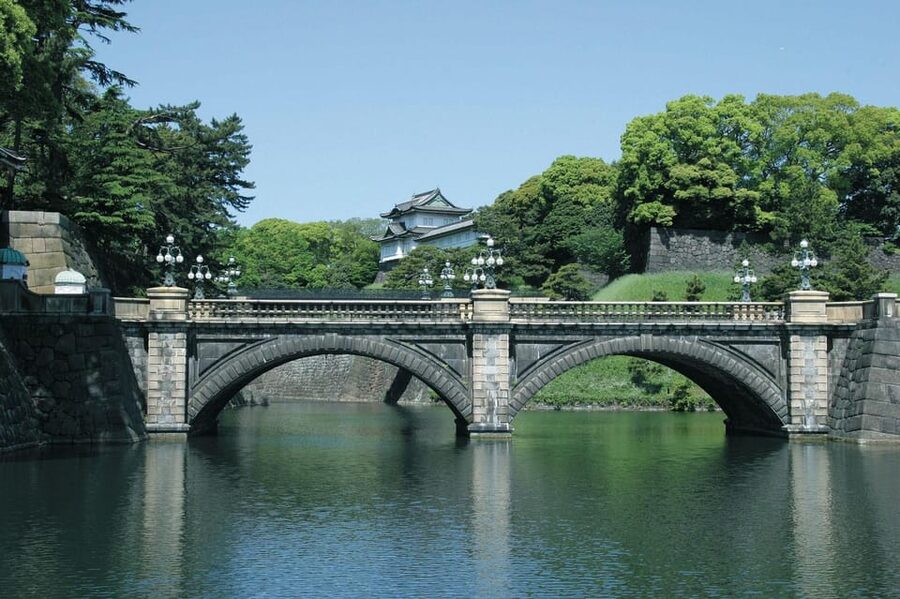
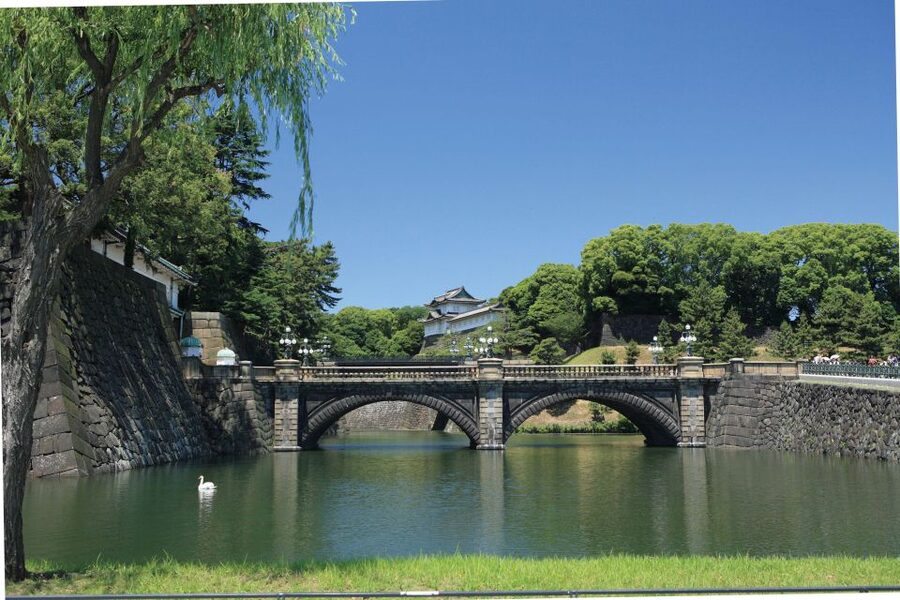
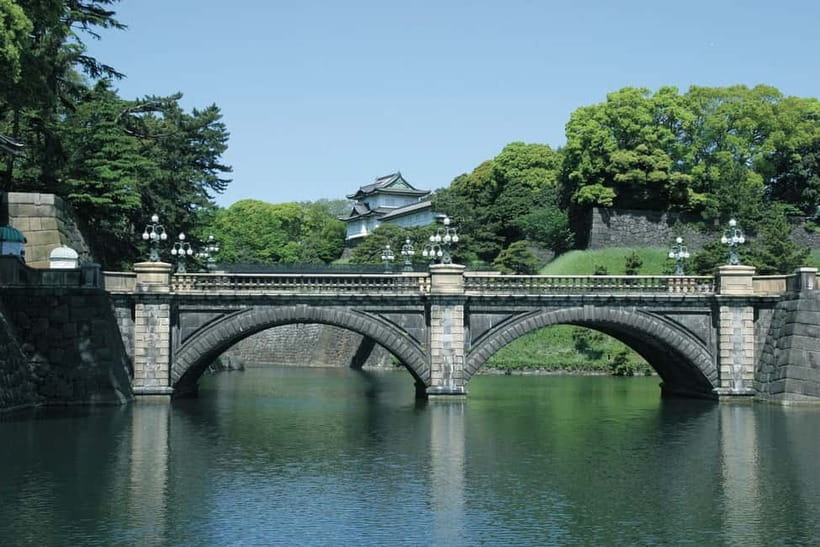
The first stop introduces the ceremonial heart of Tokyo. You get off the bus near the Imperial Palace Outer Area and walk for about 40 minutes. The focus is the statue of Masashige Kusunoki and the Nijubashi Bridge area, with time for photographs and a look at the palace surroundings.
This is not an Imperial Palace interior visit. The East Gardens are not included, and entry into the palace itself is not permitted on this tour. That limitation is made clear, but it is still the main point to understand before booking. If your idea of seeing the palace means entering its gardens or buildings, you will need a separate visit.
The outer area still gives you a worthwhile first look at imperial Tokyo. The broad open setting, formal architecture, bridge views, and connection to Japan’s modern government make this a useful stop for orientation. Your guide can also put the statue and palace grounds into historical context, which helps the site mean more than a quick photograph.
Bring comfortable shoes. The walk is not described as difficult, but you will get on and off the bus and cover ground at each stop. The tour notes that a few steps are required when boarding and leaving the bus, so passengers with mobility concerns should factor that in, even though the activity is listed as wheelchair accessible.
Tokyo Tower at 150 meters
Tokyo Tower gives you the clearest broad view of the three stops. The tour includes entry to the main observatory, 150 meters above the ground, with about 40 minutes for the visit. On a clear day, you may spot Mount Fuji, though weather can easily hide it.
The tower is one of Tokyo’s familiar symbols, but the value here is not just the photo. From above, you can grasp the city’s huge scale and better understand how far apart your other stops are. It is also a welcome indoor break in hot or wet weather. One August visit was especially appreciated because the bus and the tower offered relief from temperatures above 35 degrees Celsius.
Forty minutes is enough to take in the view and take photographs, but it is not a leisurely tower visit. Crowds can slow elevators and movement around the observation area. If you are determined to wait for the perfect Mount Fuji view or take photographs from every angle, you may wish for more time.
The sequence also matters. Visiting Tokyo Tower before Sensō-ji means your final stop is more flexible. You can stay around Asakusa afterward for food and shopping if your plans allow, although the formal tour returns to its starting point. Confirm the end arrangements with your guide if you hope to remain in the area.
Sensō-ji and the 200-meter Nakamise street
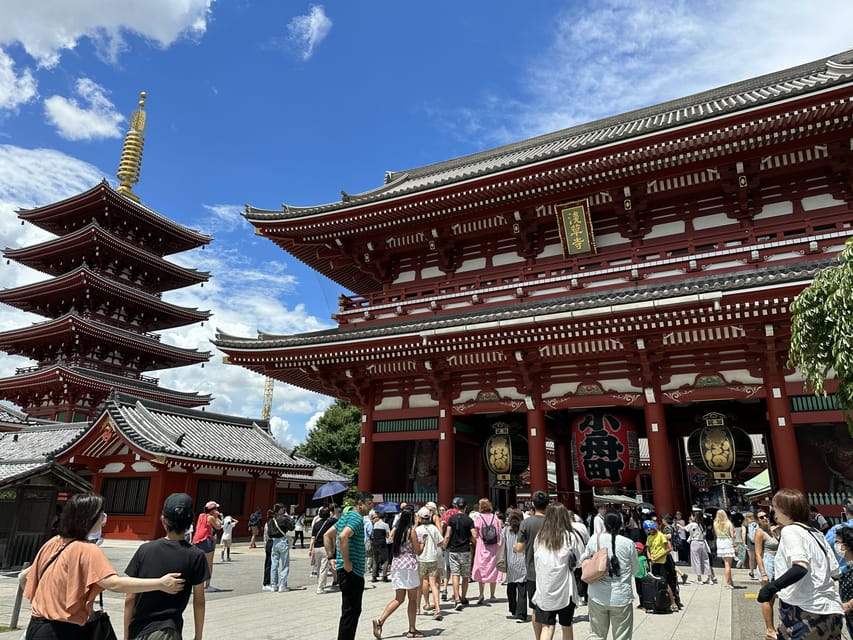
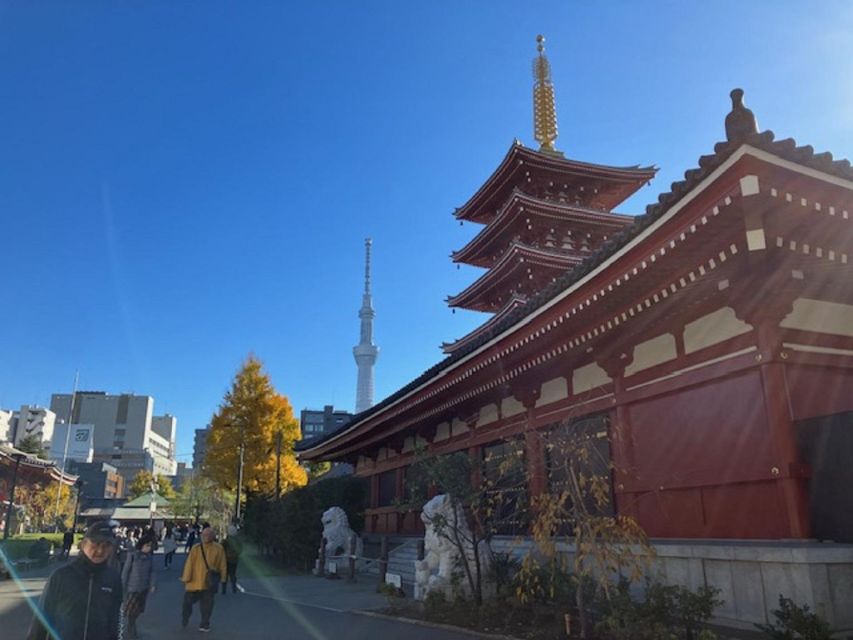
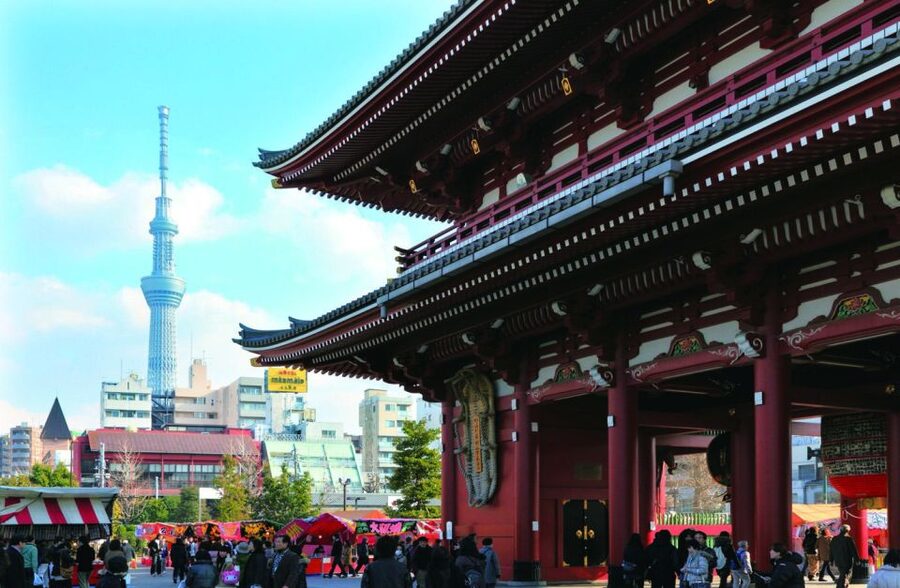
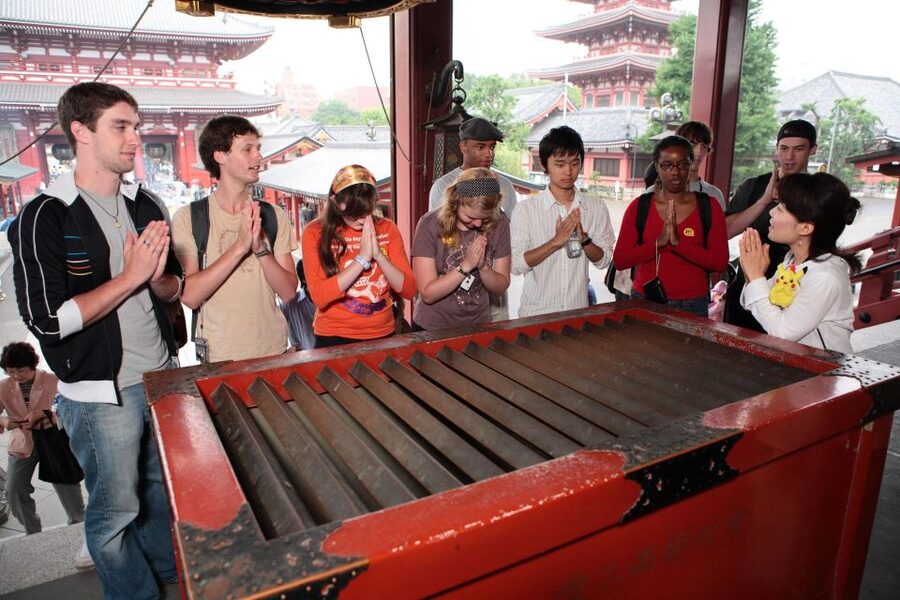
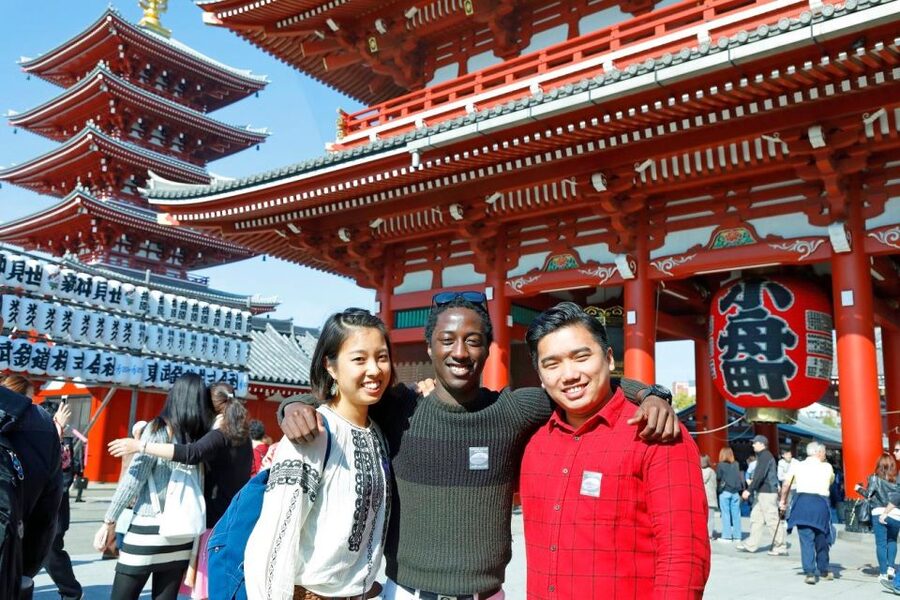
Asakusa is the cultural centerpiece of the route. Sensō-ji, also called Asakusa Kannon Temple, is Tokyo’s oldest temple, and the tour gives you about an hour here. The guide explains the temple’s craftsmanship and traditions, then allows free time to explore.
This stop offers more room to wander than the palace or tower. You can look around the temple grounds, take photographs, learn about the difference between Buddhist temples and Shinto shrines, and watch the flow of people arriving to pray. One guide, Kumiko, was praised for explaining how to pray and for making Japanese customs easy to understand.
Nakamise, the traditional shopping street within the complex, runs about 200 meters. It is a practical place to buy small souvenirs and try local snacks or meals. Food and shopping are not included, so carry some cash. One useful tip from the supplied experience is that the market is mostly cash only.
The tradeoff is crowding. Sensō-ji is one of Tokyo’s best-known sights, and holidays can make the walkways especially busy. Stay aware of the meeting instructions and keep the group in sight. One person found the final stop less cohesive and ended up wandering alone, so it is sensible to note the bus location and confirm the return time before setting off independently.
Because the tour ends at this stop in the route description, you may have a chance to continue eating or shopping in Asakusa after the guided portion. Do not assume that means the bus will wait for you. If you leave the group, make sure you understand where and when you must return, or whether you are choosing to make your own way afterward.
More half-day trips in Tokyo:
- Athens: Cape Sounion & Poseidon Temple Sunset Half-Day Trip
★ 4.8 · 8,241 reviews - From Nice: Eze, Monaco, & Monte-Carlo Half-Day Trip
★ 4.5 · 5,642 reviews - From Paris: Giverny, Monet’s Home & Gardens Half-Day Trip
★ 4.5 · 2,887 reviews - Half-Day Trip to Montmorency Falls and Ste-Anne-de-Beaupré from Quebec city
★ 4.0 · 2,718 reviews
The hybrid bus and guide make the difference
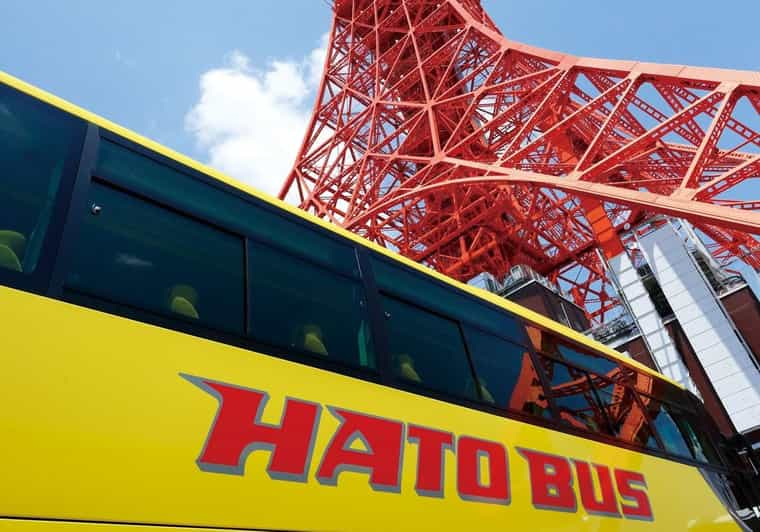
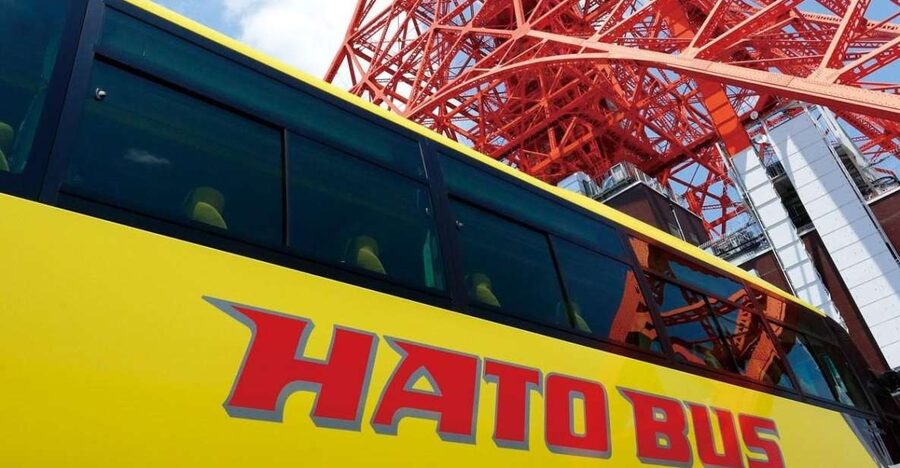
The bus is the practical backbone of the experience. Tokyo traffic can be slow, but the alternative is navigating several train lines and station exits while trying to fit three major sights into one morning or afternoon. The hybrid vehicle also offers air conditioning, a major comfort in summer, and recent accounts describe the bus as clean and well maintained.
The group size appears manageable rather than enormous. One account estimated about 20 people, though the exact size may vary. A group of that scale makes it easier to hear the guide and get help with photographs, while still requiring you to pay attention when moving through busy public areas.
The strongest part of the tour is the guide service. English-speaking guides have been praised for clear speech, humor, patience, and personal touches. Aki taught Japanese phrases and explained how she put on her kimono and obi. Kumiko used old photographs and comparisons between cultures to make Tokyo’s past easier to picture. Yuko added a small language activity, and Shota covered subjects ranging from the emperor to Shinto, Buddhism, and local shopping.
Guide quality can never be guaranteed by name, since the assigned person may change. Still, the pattern is clear: this is not simply a bus ride with a few announcements. The guide is central to the experience, especially at the palace and temple, where context turns a brief stop into something more meaningful.
What $40 gets you
At $40 per person, the tour offers solid value if you want transportation, admission, and explanations bundled together. Tokyo Tower entry is included, along with the bus, the licensed English-speaking guide, and the guided stops at the palace outer area and Sensō-ji.
You are also paying for time saved. Three separate visits by public transport would require route planning, station navigation, and careful attention to opening times and meeting points. The bus cannot remove Tokyo traffic, but it takes away much of the mental work.
The price is less compelling if you are already confident using Tokyo’s trains and want to explore at your own pace. You will not receive a long palace visit, and free time at the tower is limited. Food, drinks, and purchases at Nakamise cost extra. Hotel pickup and drop-off are not included, so you must reach the selected departure point yourself.
For a first day in Tokyo, I think the value is particularly strong. You can learn the basic shape of the city, hear useful cultural explanations, and then choose where to return independently. It is also a sensible option after a long flight, when a guided route is easier than solving Tokyo’s transport system immediately.
Who should book this Tokyo bus tour?
I would recommend it to first-time Tokyo visitors, short-stay visitors, families who want a simple route, and anyone who prefers explanations in English. It is also a good fit if you are staying near Shinjuku and want an easy way to reach Tokyo Tower and Asakusa without spending the day changing trains.
The tour suits people who like a clear plan but still want a little freedom. Sensō-ji provides the most independent time, with room for food and shopping. The stops also work well for mixed interests: palace history, city views, temple customs, souvenirs, and local snacks all appear in one compact outing.
You may want another plan if you dislike group schedules, need extensive time for photography, or want to enter the Imperial Palace grounds. It may also be less comfortable for anyone who finds steps, bus boarding, or short walks difficult, despite the wheelchair-accessible designation. Ask about your specific needs before booking.
The cancellation terms are traveler-friendly: you can cancel up to 24 hours ahead for a full refund, and the reserve-now, pay-later option keeps your plans flexible. Enter your first and last name carefully when booking. The supplied instructions limit the name to 20 characters, with a middle name allowed to be omitted if necessary.
My verdict: a smart first look at Tokyo
Book this tour if you want Tokyo’s essential sights without wrestling with the transport network on your first day. The route is efficient, the guide service is its strongest feature, and the included Tokyo Tower ticket helps justify the $40 cost.
Go in with the right expectations. You will see the palace from the outer area, not enter it. You will get a good hour at Sensō-ji, not an entire afternoon. You will see Tokyo Tower from its main observatory, but crowds and weather may affect the experience.
For many people, that is exactly the point. The tour gives you a clear first look, useful cultural background, and a comfortable way to cover a large city. I would choose it early in a Tokyo visit, then return on my own to the places that deserve more time.
FAQ
How long does the Tokyo bus tour last?
The activity is listed as a four-hour tour, with availability described as up to 270 minutes. Check the available starting time and duration for your selected date.
Where does the tour start?
The starting point depends on the option booked. Choices include the Hato Bus Tokyo office and Hato Bus Shinjuku Station East Exit.
Where does the tour finish?
The supplied route ends back at the Hato Bus Tokyo office. One option may involve a different arrangement, so confirm the return point for your booking.
Is hotel pickup and drop-off included?
No. You must make your own way to the selected departure point, and hotel pickup and drop-off are not included.
Can I enter the Imperial Palace?
No. The tour visits the Imperial Palace Outer Area and the Nijubashi Bridge area. Entry into the palace itself and the East Gardens are not included.
Which places does the tour visit?
The route includes the Imperial Palace Outer Area, Tokyo Tower, and Asakusa Kannon Temple, also known as Sensō-ji.
Is Tokyo Tower admission included?
Yes. Admission to the main observatory at 150 meters is included.
Is the tour conducted in English?
Yes. A live English-speaking guide accompanies the tour, and the experience is conducted in English.
Is the tour wheelchair accessible?
The activity is listed as wheelchair accessible, but you should note that a few steps are required when boarding and leaving the bus. Children under six can travel free, but seats are not provided for them.
More 1-Day Tours in Tokyo
- Tokyo: Mt. Fuji, Kamakura, Big Buddha, & Lake Ashi Day Trip
★ 4.5 · 867 reviews - Tokyo Private Day Trip – Enjoy Your First-Time Visit to Tokyo!
★ 5.0 · 793 reviews - Mt. Fuji Day Trip from Tokyo with English Speaking Driver Guide
★ 5.0 · 443 reviews - Tokyo: Mount Fuji and Hakone Private Sightseeing Day Trip
★ 4.8 · 434 reviews
Just added around Tokyo
- Tokyo Private Day Trip With English Speaking Driver★ 4.9 · 34 reviews
- Tokyo: Mount Fuji and Hakone Private Sightseeing Day Tour★ 4.9 · 76 reviews
- Tokyo → Nikko:Private Customizable Day Trip (English Driver)★ 4.9 · 26 reviews
- Tokyo: Onsen, Arts, and Nature Day Trip to Fuji and Hakone★ 5.0 · 66 reviews
- Tokyo: Nikko World Heritage Private Day Trip Hotel Pick-up★ 4.8 · 145 reviews
- From Tokyo:Mount Fuji&Hakone Customize Full Day Private Tour★ 4.8 · 27 reviews
- Tokyo: Mt. Fuji 5th St, Gotemba & Hakone by Luxury Bus★ 4.5 · 84 reviews
- Tokyo: Day Trip to Kamakura in Spanish – Spanish★ 4.9 · 22 reviews
Morning, compared.

Catania: Mount Etna Morning or Sunset Day Trip with Tasting
Read our review →

Montserrat: Morning or Afternoon Half-Day Trip with Pickup
Read our review →
Mt. Seorak+Nami Island+Garden of Morning Calm Day Trip from Seoul
Read our review →
Yulara: Uluru Sunrise and Kata Tjuta Day Trip by Bus
Read our review →
From Surabaya or Malang: Private Mt. Bromo Sunrise Day Trip
Read our review →
Meteora 2-Day Trip with Hotel, Sunset & Morning tour
Read our review →
From Jerusalem: Masada Sunrise, Ein Gedi & Dead Sea Day Trip
Read our review →Browse the lists this tour appears in