
REVIEW · TOKYO
Tokyo: Day Trip to Kamakura in Spanish – Spanish
Kamakura offers a calm change of pace. This Spanish-language day trip combines temples, old transport, local shopping streets, and clear cultural explanations in one eight-hour outing from Tokyo. I especially like the visit to Hase-dera and the chance to see Kamakura with guides such as Camila, Nerea, Paula, Ori, and Nikita, who have been praised for their patience and useful recommendations. I also like that the tour uses public transportation rather than keeping you inside a private vehicle all day.
The main drawback is cost clarity. The $86 price does not include transportation, listed as ¥2,300, temple tickets of ¥700, or food and drinks. You should also expect a full day of walking, trains, and a tram, so this is not a good fit for wheelchair users or anyone who needs a fully accessible route.
Key points at a glance
- A Spanish-speaking introduction to Kamakura: Guides explain the temples, legends, and customs in Spanish, with some reports of English being used as well.
- Hase-dera comes first: This temple combines religious stories, gardens, and a setting that rewards slow exploration.
- The Great Buddha is the visual centerpiece: Kotoku-in houses a 13-meter bronze Buddha weighing 121 tons.
- The Enoden tram adds local character: You ride one of Japan’s oldest trams still in operation to reach Hase-dera.
- Shopping and lunch are built into the day: The main street gives you time to eat, browse, and enjoy a different pace from Tokyo.
- Budget beyond the headline price: Add ¥2,300 for transportation and ¥700 for temple admissions, then plan for lunch and drinks.
Why Kamakura makes a good break from Tokyo
Tokyo can fill a day with tall buildings, crowded crossings, and efficient trains. Kamakura offers something quite different: temple grounds, wooded views, old religious sites, and streets where you can browse small shops at a slower pace.
Kamakura was once an important political center, and its temples and shrines still give the town a sense of age that is hard to find in central Tokyo. You do not need to arrange the route yourself, decipher every train connection, or decide which temple deserves your limited time. The guide handles the structure, while you focus on the setting and the stories.
I like this format for a first visit because the day has a clear shape. You meet at Tokyo Station, travel together to Kamakura, visit two major temple sites, stop for lunch and shopping, and return to Tokyo. It is not a loose collection of stops. The plan gives you enough variety without trying to cover every corner of the town.
The Spanish language is the central reason to book this particular outing. A good explanation can change the way you see a statue, gate, garden, or ritual space. The strongest comments about the guides focus on exactly that point. Nerea was praised for her patient approach with children and her storytelling, while Paula was singled out for her command of Japanese history. Nikita was described as friendly, attentive, and detailed, and Ori made the visit enjoyable while offering practical suggestions.
A few more day trips from Tokyo worth a look
- Tokyo: Mt. Fuji, Kamakura, Big Buddha, & Lake Ashi Day Trip
★ 4.5 · 867 reviews - Tokyo Private Day Trip – Enjoy Your First-Time Visit to Tokyo!
★ 5.0 · 793 reviews - Mt. Fuji Day Trip from Tokyo with English Speaking Driver Guide
★ 5.0 · 443 reviews
Meeting at Tokyo Station and riding south
The meeting point is in front of Tokyo Station’s facade at Marunouchi Square, by the central exit. This is a useful landmark, but Tokyo Station is large, so give yourself time to reach the square. You should arrive ready to begin rather than trying to buy breakfast, find cash, or organize a large bag at the last minute.
The train ride to Kamakura is part of the experience, not just a way to fill the gap between attractions. Public transportation lets you see the practical side of the journey and keeps the price lower than a private car excursion. It also means you need to follow the guide closely and stay aware of the group during station transfers.
Transportation is not included in the headline price. The stated amount is ¥2,300, so add that to your budget before booking. One useful detail from the experience is that the transport was described as comfortable and air-conditioned, with little waiting time. That can make a major difference on a long summer day, though you should still expect movement through stations and time on your feet.
Large luggage is not allowed. Bring a small day bag with only what you need for the temples, lunch, and shopping. Since the route uses trains and a tram, a bulky suitcase would make the day harder for you and for the rest of the group.
Hase-dera and the old tram ride
Once you reach Kamakura, you board one of the oldest trams still operating in Japan. This is the Enoden line, though the supplied tour information refers to it simply as an old tram. The ride gives the outing a strong sense of place. Instead of moving directly from one tourist site to another in a coach, you travel as people do locally.
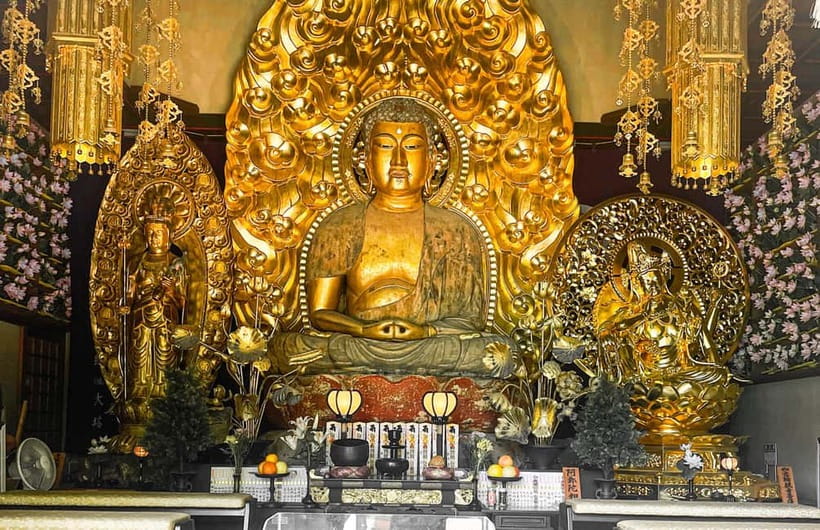
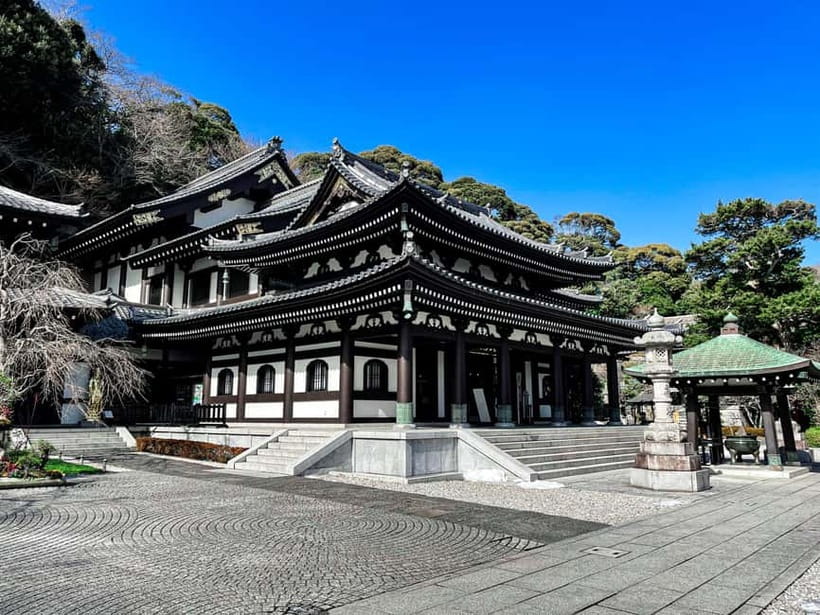
You then get off for Hase-dera, one of the most atmospheric stops of the day. The temple is presented through its myths and legends, and the guide’s role matters here. Without context, a temple can look like a pretty collection of gates, statues, plants, and buildings. With a Spanish explanation, you can better understand why particular areas matter and how local stories shape the site.
The temple is also a good match for people who enjoy a mix of culture and scenery. The setting includes serene nature and views, according to the tour description and direct comments about the visit. You might find that Hase-dera feels less like a single monument and more like a place to explore at several levels, with religious details and quiet corners competing for your attention.
Do not expect a rushed photo stop. The schedule has to keep moving, but this is one of the places where you will want to listen carefully and look around. The legends are part of the appeal, especially if you prefer cultural context to a simple list of dates and names.
The practical issue is uneven ground and walking. The tour is not suitable for wheelchair users, and the day uses public transportation. If stairs, slopes, or extended walking are difficult for you, ask the provider for current route details before paying.
The Great Buddha at Kotoku-in
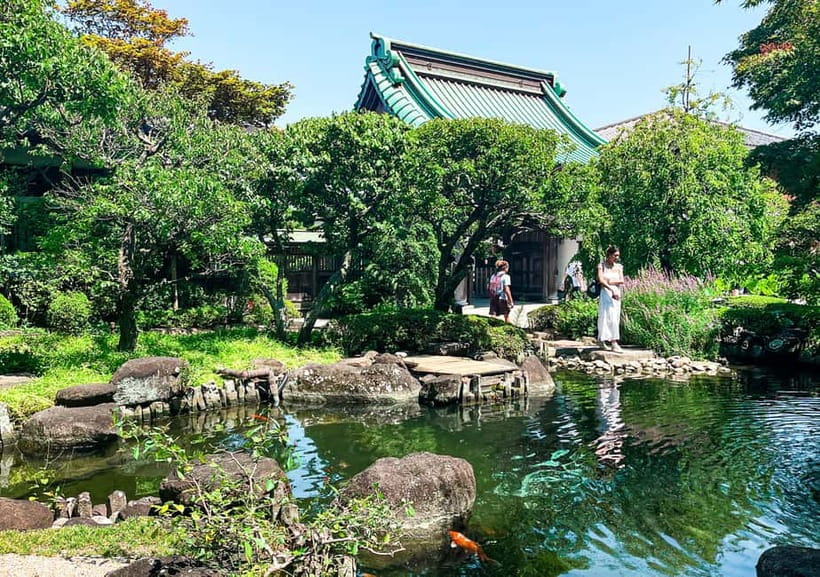
From Hase-dera, the tour continues on foot to Kotoku-in Temple. This short connection helps you see Kamakura as a town rather than a sequence of isolated attractions. You move between sites through the settlement, with the guide pointing out details along the way.
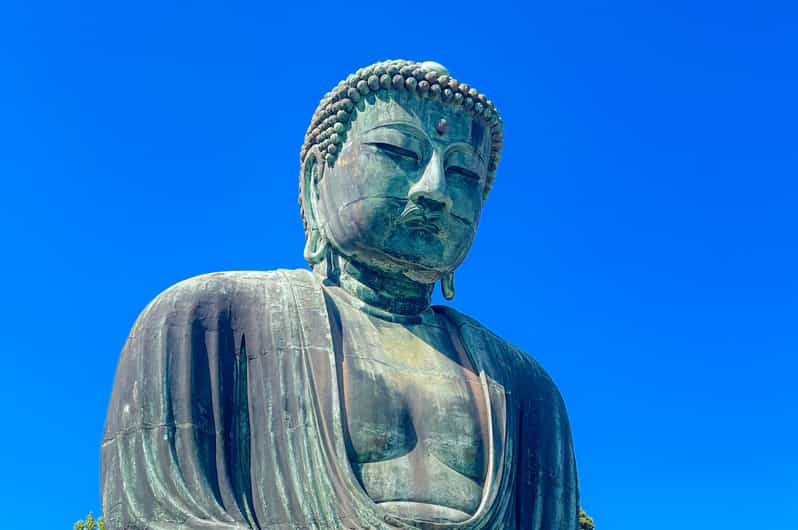
Kotoku-in is home to Kamakura’s famous Great Buddha, a bronze figure measuring 13 meters and weighing 121 tons. Those numbers are useful because they explain the scale before you arrive, but the real effect comes from seeing the statue in person. The figure has a calm presence, and its size gives the temple visit a clear visual focus.
This stop is less about wandering through a large complex and more about taking in one major work of religious art. I would plan to pause here instead of treating it as another quick photograph. Listen to the guide’s explanation, look at the craftsmanship, and notice how the statue changes your sense of scale.
The temple ticket is not included. The listed admission cost is ¥700. That is a modest extra charge, but you should count it with the ¥2,300 transport cost when working out the real price of the day. Food and drinks are also separate.
The walk from Hase-dera to Kotoku-in gives the itinerary a sensible rhythm. You begin with a temple full of stories and natural surroundings, then move to a single monumental object that is easy to remember. For many people, the Great Buddha will be the day’s defining sight, while Hase-dera provides the richer setting.
Same base, a completely different day out:
- From Tokyo: Mount Fuji Customizable Private Day Tour
★ 4.9 · 1,070 reviews - Tokyo: Mount Fuji and Hakone Private Sightseeing Day Trip
★ 4.8 · 434 reviews - From Tokyo: Mount Fuji And Hakone Private Full Day Trip
★ 4.8 · 359 reviews - From Tokyo: Nikko World Heritage Site Private Full-Day Trip
★ 4.9 · 243 reviews
Lunch and shopping on Kamakura’s main street
After the temples, you head to the town’s main street. This is where the day becomes less formal. The street is lined with shops and has a distinct local atmosphere, giving you time to browse, find lunch, and take a break from guided explanations.
Food is not included, and the tour does not specify a restaurant or fixed menu. That is useful if you prefer to choose your own meal, but it also means you should budget separately and follow the guide’s timing. You may receive recommendations, since practical tips are part of the service, but the exact options can change.
Shopping is not filler here. It gives you a chance to see the everyday side of Kamakura after visiting its major religious sites. You can look for local snacks, small souvenirs, or other items that catch your eye. Keep your purchases manageable, since you still need to return by train.
This is also a good point to ask your guide for advice about the rest of your Japan trip. The tour promises tips and recommendations, and the strongest guide comments praise this personal attention. Camila was described as organized and helpful throughout the day, while Nerea was praised for adapting to the pace of children in the group.
The tradeoff is that free time can feel short if you want to eat slowly and shop at length. An eight-hour excursion has to fit in two temples, transport, lunch, and the return journey. If you want a relaxed full-day shopping visit, this tour will not provide that. If you want a compact introduction to Kamakura with some independent time, the balance works better.
What the Spanish guiding adds
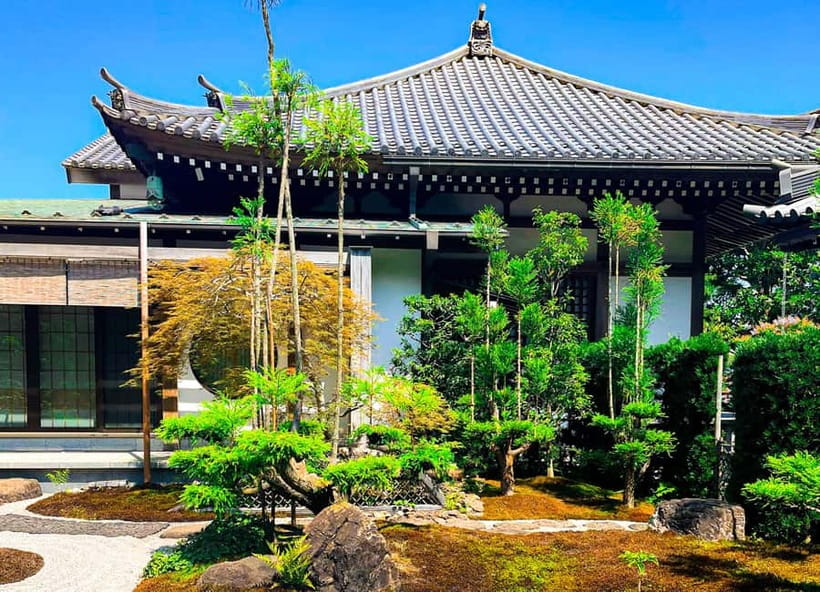
The quality of this day depends heavily on the guide. The route itself is easy to understand, but the temples become more memorable when someone explains the legends, historical setting, and small details in a language you follow comfortably.
The named guides receive especially warm praise. Camila is described as attentive and efficient, Paula for her strong explanations of Japanese history, and Nerea for patience, warmth, and flexibility with children. Nikita is praised for making people feel comfortable right away and explaining the sites in detail. Ori is described as making the tour lively while offering useful suggestions.
There is one point to clarify before booking. One person experienced some confusion because the guide initially presented the tour as Spanish-language but later also guided in English. That does not mean Spanish will be absent, but you may want to confirm the language arrangement if every explanation must be in Spanish.
The promise of personalized service is best understood as a guide-led small-scale feel, not as a private tour. No group size is provided, so you should not assume that the guide will tailor every minute exclusively to you. Still, the direct descriptions point to guides who are patient, friendly, and willing to adjust their pace.
The environmentally friendly approach is another small positive. Since the outing uses public transportation, the format avoids a private vehicle for the route. The tour does not provide further environmental details, so I would treat this as a practical public-transit design rather than a reason on its own to book.
Is $86 a fair price?
The advertised cost is $86 per person, but the final spend is higher. Add ¥2,300 for transportation and ¥700 for temple tickets, then allow extra money for lunch and drinks. The real question is not just the listed price. It is how much you value Spanish explanations, route planning, and the convenience of seeing Kamakura in one organized day.
The price makes more sense if you are staying in Tokyo for a limited time and do not want to plan the train route, tram connection, temple order, and return by yourself. It also has value if you want detailed Spanish commentary rather than reading signs or joining an English-language group.
You may find it less attractive if you are comfortable arranging public transportation and already know which Kamakura temples you want to see. Independent visitors can choose their own pace, spend longer in the shopping district, and avoid paying for a guide. This tour charges for structure, explanations, and company, not just admission to the sites.
The 4.9 rating from 22 reviews is encouraging, especially because the praise repeatedly centers on guide quality and the overall organization. The smaller review total means you should still read the inclusions carefully. The one three-star comment focused on transport not being included, which is exactly why the additional ¥2,300 deserves attention before you book.
Who will enjoy this Kamakura day trip?
I would recommend it most strongly to Spanish-speaking visitors who want cultural context without handling the whole day alone. Families may also like it, particularly because Nerea was praised for keeping children comfortable and engaged.
It suits you if you enjoy temples, legends, public transportation, short walks between attractions, and time for local shopping. It is also a good choice if you want advice for the rest of your Japan trip from someone familiar with the route.
I would think twice if you want a private vehicle, a slow temple day, or a completely accessible itinerary. Large bags are not allowed, unaccompanied minors cannot join, and the activity is specifically marked as unsuitable for wheelchair users and people with hearing impairments.
The tour finishes back at the Tokyo Station meeting point. That makes it easier to plan an evening afterward, though you should avoid booking a tight dinner reservation or long-distance connection since the outing lasts eight hours and relies on public transportation.
Should you book it?
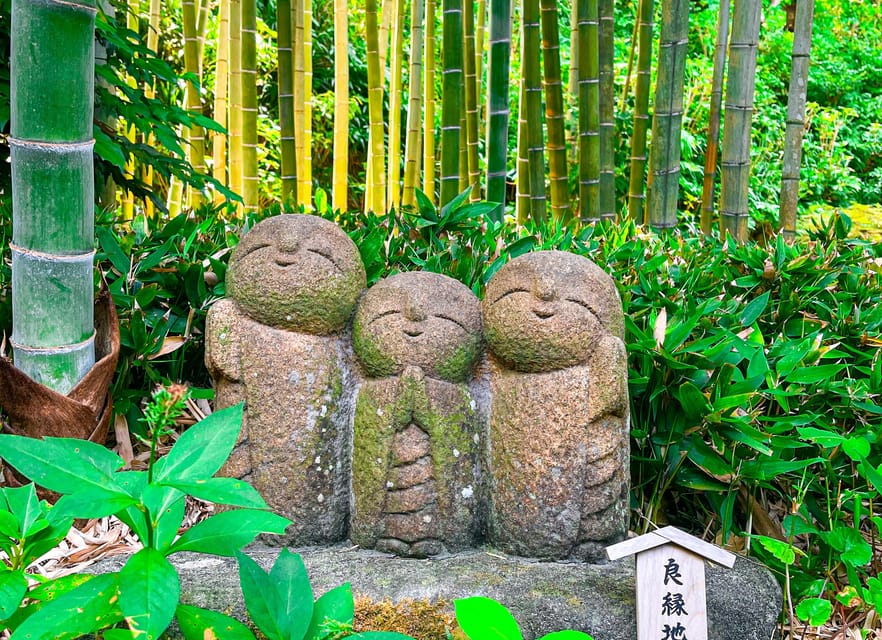
Book this excursion if you want Kamakura explained in Spanish, with Hase-dera, the Great Buddha, the old tram, and shopping time arranged into one day. The guides appear to be the strongest part of the experience, especially people such as Nerea, Paula, Camila, Nikita, and Ori, who are praised for warmth, patience, historical explanations, and useful advice.
Skip it if you want to control every stop or keep costs as low as possible. The headline price leaves out transport, temple admissions, food, and drinks, and the walking and public transit require reasonable mobility.
For the right person, this is a practical way to trade Tokyo’s fast pace for Kamakura’s temples, stories, and quieter streets without losing the comfort of Spanish guidance.
FAQ
Is the tour conducted in Spanish?
Yes. Spanish is the listed language for the excursion. One report also describes some English being used, so confirm the language arrangement if you need all guiding to be in Spanish.
How long does the excursion last?
The excursion lasts eight hours.
Where does the tour begin?
It begins in front of the Tokyo Station facade at Marunouchi Square, by the central exit.
Where does the tour end?
The activity ends back at the original meeting point at Tokyo Station.
Is transportation included in the $86 price?
No. Transportation is listed separately at ¥2,300. Public transportation is used during the excursion.
Are temple admission tickets included?
No. Temple tickets are listed separately at ¥700.
Are lunch and drinks included?
No. You pay separately for food and drinks during the lunch and shopping stop.
Can I bring luggage or a large bag?
No. Luggage and large bags are not allowed.
Is the tour suitable for wheelchair users or people with hearing impairments?
No. The activity is listed as unsuitable for wheelchair users and people with hearing impairments.
Just added around Tokyo
- Tokyo Private Day Trip With English Speaking Driver★ 4.9 · 34 reviews
- Tokyo: Mount Fuji and Hakone Private Sightseeing Day Tour★ 4.9 · 76 reviews
- Tokyo → Nikko:Private Customizable Day Trip (English Driver)★ 4.9 · 26 reviews
- Tokyo: Onsen, Arts, and Nature Day Trip to Fuji and Hakone★ 5.0 · 66 reviews
- Tokyo: Nikko World Heritage Private Day Trip Hotel Pick-up★ 4.8 · 145 reviews
- Tokyo: A Half-Day Trip Bus Tour in the Morning★ 4.6 · 236 reviews
- From Tokyo:Mount Fuji&Hakone Customize Full Day Private Tour★ 4.8 · 27 reviews
- Tokyo: Mt. Fuji 5th St, Gotemba & Hakone by Luxury Bus★ 4.5 · 84 reviews
Day Trips from Tokyo, compared.
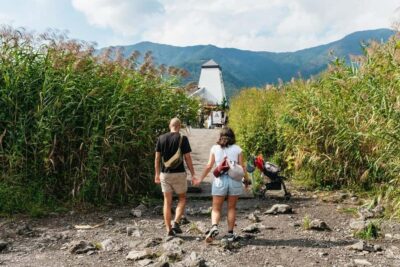
Mt. Fuji, Kamakura, Big Buddha, & Lake Ashi Day Trip
Read our review →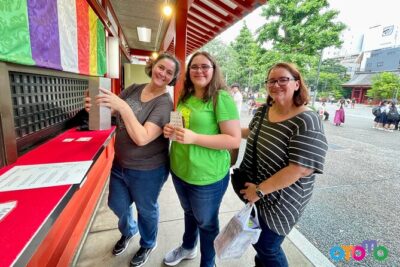
Tokyo Private Day Trip – Enjoy Your First-Time Visit to Tokyo!
Read our review →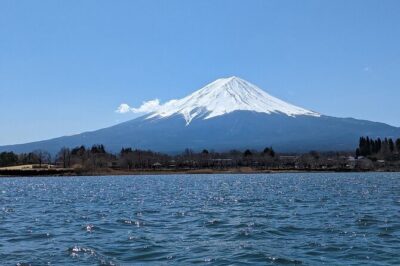
Mt. Fuji Day Trip from Tokyo with English Speaking Driver Guide
Read our review →
Browse the lists this tour appears in